
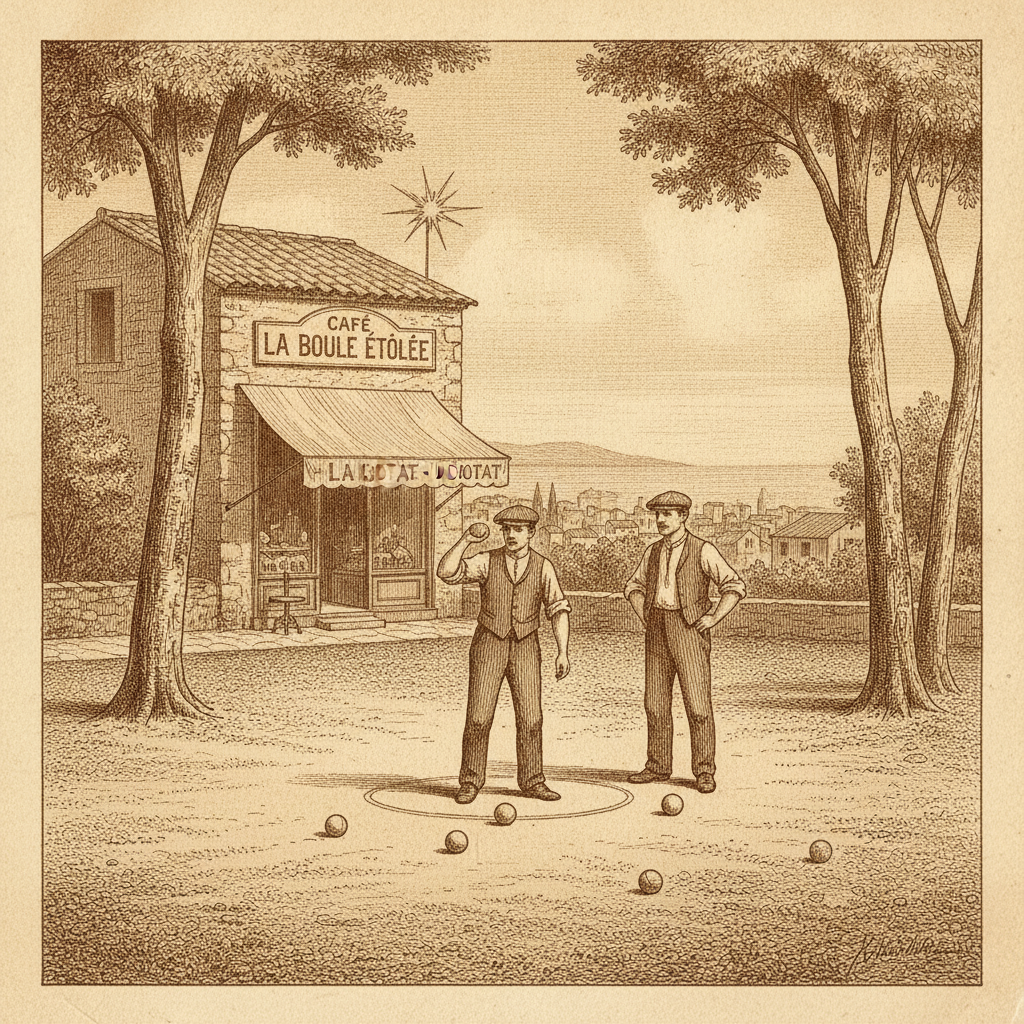
Jules Hugues - Founder | Petanque Player Profile
Jules Hugues, known as 'Lenoir,' is the jeu provencal champion whose rheumatism led to pétanque's invention in La Ciotat (dated 1907 by the FFPJP, 1910 by other historians). His story, legacy, and the boulodrome that bears his name.
🇫🇷
Nationality
Inventor
Role
Career Achievements
The Player Who Gave Pétanque Its Name
Jules Hugues did not set out to invent one of the world's most widely played boules sports. He was, by all accounts, simply a talented and well-known jeu provençal player in the small Mediterranean port town of La Ciotat, near Marseille, in the years before the First World War. Known locally by his nickname "Lenoir" ("Le Noir"), Hugues had built a strong local reputation in jeu provençal (also called la longue), the demanding running form of boules that dominated southern France at the time. It was the ending of that career, not the peak of it, that changed the sport of boules forever.
Almost nothing about Hugues's life beyond La Ciotat has survived in the historical record - no federation, museum, or archive consulted for this profile documents his birth or death dates or details of his family. Several independent local accounts do agree on one detail: Hugues was a La Ciotat shopkeeper (commerçant) by trade. What is consistently and independently documented, across the FFPJP's own official history page, regional boules-club histories, and multiple journalistic accounts of the sport's origin, is the single afternoon that made him historically significant - though even the year of that afternoon is disputed among the sport's own historians (see below).
Rheumatism and the Béraud Grounds
Jeu provençal required its players to take a running start before releasing the boule, a physically demanding motion that rewarded athleticism as much as precision. By the early 1900s, Hugues was increasingly troubled by severe rheumatism - joint pain and stiffness that made the running approach agonizing and, eventually, impossible to perform.
The turning point came at La Boule Étoilée, a boules ground that brothers Ernest and Joseph Pitiot built on La Ciotat's Béraud grounds, separate from the café they ran nearby, the Bar de l'Horloge - a level of detail specific to the fullest family-sourced account of the story; most shorter retellings simply call the whole site "La Boule Étoilée." The FFPJP's own official history page dates this to 1907; pétanque historians Jac Verheul and Martine Pilate instead place it in the spring of 1910, only months before the first official tournament there that June. Watching Hugues struggle, the Pitiot brothers worked out a fix between them: that same family-sourced account credits Joseph with first suggesting Hugues play seated in a chair at the throwing line, with Ernest then drawing the circle around him and fixing the rule that both feet stay planted together, while shorter popular retellings credit Ernest alone with a standing, feet-together throw. Either way, the idea let a champion who could no longer run keep playing the sport he loved - and it turned out to be far more than a one-off accommodation.
The Birth of a Name
The new, stationary style of play took its name directly from Hugues's adaptation. The Provençal expression pè tanca (rendered in French as pieds tanqués, "feet planted" or "feet anchored") described exactly what Hugues now did at the throwing circle - and that phrase contracted into pétanque. Every one of the roughly 20 million people who now play the sport worldwide plays, in a literal linguistic sense, "Jules Hugues's way."
The Pitiot brothers spent the following years refining and popularizing the format at the Béraud grounds, and on 11 June 1910 they organized La Ciotat's first official tournament under the new rules - eight two-player teams competing for a 10-franc prize, per Verheul and Pilate's account, in the event most sources treat as pétanque's formal debut, even though the adaptation for Hugues is the point at which the game itself was actually created, whichever of the two disputed years that adaptation happened. For the fuller story of how that 1910 tournament led to the founding of the FFPJP (1945) and the FIPJP (1958), see our complete history of pétanque.
A Legend With a Real Boulodrome
Unlike the sport's later champions, Hugues left no competitive record in pétanque itself - by the time the game that bore his adaptation was being formally organized and contested, his own playing career had already been ended by the illness that inspired it. His legacy instead lives in La Ciotat's civic memory of the sport's birth. The town's principal boulodrome is named the Boulodrome Jules Lenoir in his honor, and the local Association Jules Lenoir maintains a small heritage collection and museum dedicated to the origin story, keeping Hugues's adaptation alive as a point of civic pride for the town widely credited as pétanque's birthplace.
Hugues's story is also inseparable from that of the man who proposed the fix on his behalf: see our profile of Ernest Pitiot, the café-owner and later federation founder who turned a single act of friendship into the rules of a global sport.
Why This Story Still Matters
Hugues's place in pétanque history is a reminder that the sport was built, from its very first afternoon, around accessibility rather than athleticism. The stationary throw that a friend improvised so a champion with rheumatism could keep competing is the same rule that today lets children, seniors, and players with physical disabilities pick up a boule and play on equal footing with anyone else on the terrain. More than a century later, that founding idea - lower the physical barrier to entry, keep the skill and the friendship - is still the reason pétanque is played in more than 100 countries around the world. For more on how the sport continues that spirit today, see our guide to pétanque for players with disabilities.
Frequently Asked Questions
Who was Jules Hugues?
Jules Hugues, nicknamed 'Lenoir,' was a La Ciotat shopkeeper and a champion of jeu provençal (a running form of boules) in France in the early 1900s. Severe rheumatism eventually made the sport's mandatory running throw too painful for him to perform, which set in motion the adaptation that became pétanque - a game the FFPJP's own official history dates to 1907, though pétanque historians Jac Verheul and Martine Pilate instead date it to 1910.
Did Jules Hugues invent pétanque himself?
Not alone. Sources consistently credit the idea to the Pitiot brothers, Ernest and Joseph, who watched Hugues struggle and worked out a fix together - the fullest family-sourced account credits Joseph with first suggesting Hugues play seated in a chair, and Ernest with then drawing the circle and fixing the feet-together rule, though most shorter retellings simply credit Ernest alone with a standing, planted-feet throw. Hugues was the player the new rules were built around, and the game that resulted took its name - pétanque, from the Provençal pè tanca, 'feet planted' - directly from his stationary throwing style.
Why couldn't Jules Hugues play jeu provençal anymore?
He suffered from severe rheumatism (joint inflammation and stiffness) that made the running approach required by jeu provençal too painful to execute, ending his competitive career in that sport.
When and where did the invention happen?
The pivotal game took place at La Boule Étoilée, the boules ground that brothers Ernest and Joseph Pitiot built on La Ciotat's Béraud grounds (separate from their café, the Bar de l'Horloge, per the fullest family-sourced account of the story). When it happened is disputed: the FFPJP's own official history page dates it to 1907, while pétanque historians Jac Verheul and Martine Pilate instead place it in 1910, only months before the adaptation was formalized under the name 'pétanque' at the first official tournament there on 11 June that year.
How is Jules Hugues remembered today?
La Ciotat's principal boulodrome, the Boulodrome Jules Lenoir, is named in his honor, and the Association Jules Lenoir maintains a small local museum and heritage collection dedicated to the birth of pétanque in the town.