
Pétanque for Players with Disabilities: Rules, Handisport, and How to Get Involved
Pétanque needs no running or jumping, and FIPJP rules already accommodate wheelchair users. Learn the rules, France's Handisport structure, and how to find an inclusive club.
Pétanque for Players with Disabilities: Rules, Handisport, and How to Get Involved
Pétanque was never built around speed or physical force. Players stand in a small circle and throw a metal ball at a target a few meters away, then walk over and do it again. That format, unhurried, precise, and free of running or jumping, is exactly why the sport has become one of the more naturally accessible games for people with disabilities, and why its own rulebook already builds in accommodations that many other sports have had to bolt on separately.
This guide covers what the official rules actually allow, how France has organized a dedicated Handisport and Sport Adapté structure around the game, and how to find a club that welcomes disabled players.
A Sport Built for Accessibility From the Ground Up
The FIPJP's own Official Pétanque Rules include specific accommodations for players with disabilities, not as a separate parallel ruleset, but as part of the same Article 6 that governs every player's stance in the circle:
- Wheelchair users only need one wheel, the one on their throwing-arm side, resting inside the circle when they throw.
- Players with a lower-limb disability may place just one foot inside the circle rather than both, as long as the other foot is not positioned in front of it.
Because these accommodations sit inside the standard rulebook rather than a separate disabled-only competition format, a player using either accommodation can, and regularly does, compete directly alongside able-bodied players in ordinary club and tournament play. Ukraine's wounded veterans, for example, use exactly this flexibility: as covered in our piece on how pétanque is helping heal Ukraine's war veterans, amputee soldiers relearning the game were able to step onto an ordinary terrain, not a specially adapted one, and start playing.
France's Pétanque Handisport Structure
Beyond the baseline FIPJP accommodations, France has built out a dedicated competitive structure for disabled players through the Fédération Française Handisport (FFH). Pétanque Handisport uses the FFPJP's sporting regulations as its foundation and layers on Handisport-specific adaptations, mainly around classification, so that players of similar ability compete against each other fairly.
Competitions are open across five classes: F (wheelchair users who need a manual or electric chair for daily mobility), DV (visual impairment, capped at 3/10 visual acuity in the better eye), S (deaf or hard of hearing), and D1/D2 (standing physical disability, split by severity). In 2024, the FFH launched a circuit of National Opens for pétanque handisport, each built on an equivalent format with at least three competition draws per event and a simplified classification system to make entry easier for newer competitors.
Wheelchair-class competitions also adjust the throwing distance slightly, played at 6-9 meters instead of the standard 6-10 meters used in the rest of the sport, alongside the Article 6 rule that only the throwing-arm wheel needs to stay inside the circle.
Pétanque Sport Adapté: Intellectual and Psychic Disabilities
Players with intellectual or psychic disabilities are served by a separate French body, the Fédération Française du Sport Adapté (FFSA), which has held a delegation from the French Ministry of Sports since 1977 to organize physical activity for this population. Pétanque is one of roughly 20 sports the FFSA regulates, and a formal convention between the FFPJP and FFSA sets out their shared commitment to developing the game as a tool for social inclusion, health, and skill-building, distinct from the physical-disability focus of Handisport.
Finding an Inclusive Club: The Label Handi-Pétanque
For a prospective player, the most practical entry point in France is the FFPJP's own Label Handi-Pétanque, a distinction awarded to affiliated clubs every two years. Labeling is based on five main indicators: how well the club integrates people with disabilities, what pétanque and jeu provençal activities it offers them, how many FFPJP-licensed members with disabilities it has, and how those members participate and perform in competition. A club carrying the label is a reliable sign that it already has the coaching experience and adapted format to welcome a new disabled player from day one.
Beyond France: A Consistent Rulebook, Not Yet a Global Circuit
The Article 6 accommodations for wheelchair users and lower-limb disabilities are part of the FIPJP's international rulebook, so they apply in every FIPJP member federation, not just France. What we could not independently verify is an equivalent international Handisport or Sport Adapté competition circuit outside France; the detailed classification system, National Opens circuit, and club labeling program described above are specifically French structures run by the FFH, FFSA, and FFPJP. Players in other countries should contact their own national federation directly (browse our Country Guides to find one) to ask what parallel structures, if any, exist locally, since the accommodations that make the game itself playable are already built in everywhere.
Getting Started
- Read the full accommodations in our Official Pétanque Rules, including the wheelchair and lower-limb provisions in Article 6.
- If mobility, rather than a formal disability, is the main concern, our Pétanque for Seniors guide covers many of the same adapted-play techniques.
- New to the game entirely? Start with our Beginner's Guide to Pétanque.
- Thinking about starting or expanding a club to welcome disabled players? See How to Start a Pétanque Club.
Related Articles
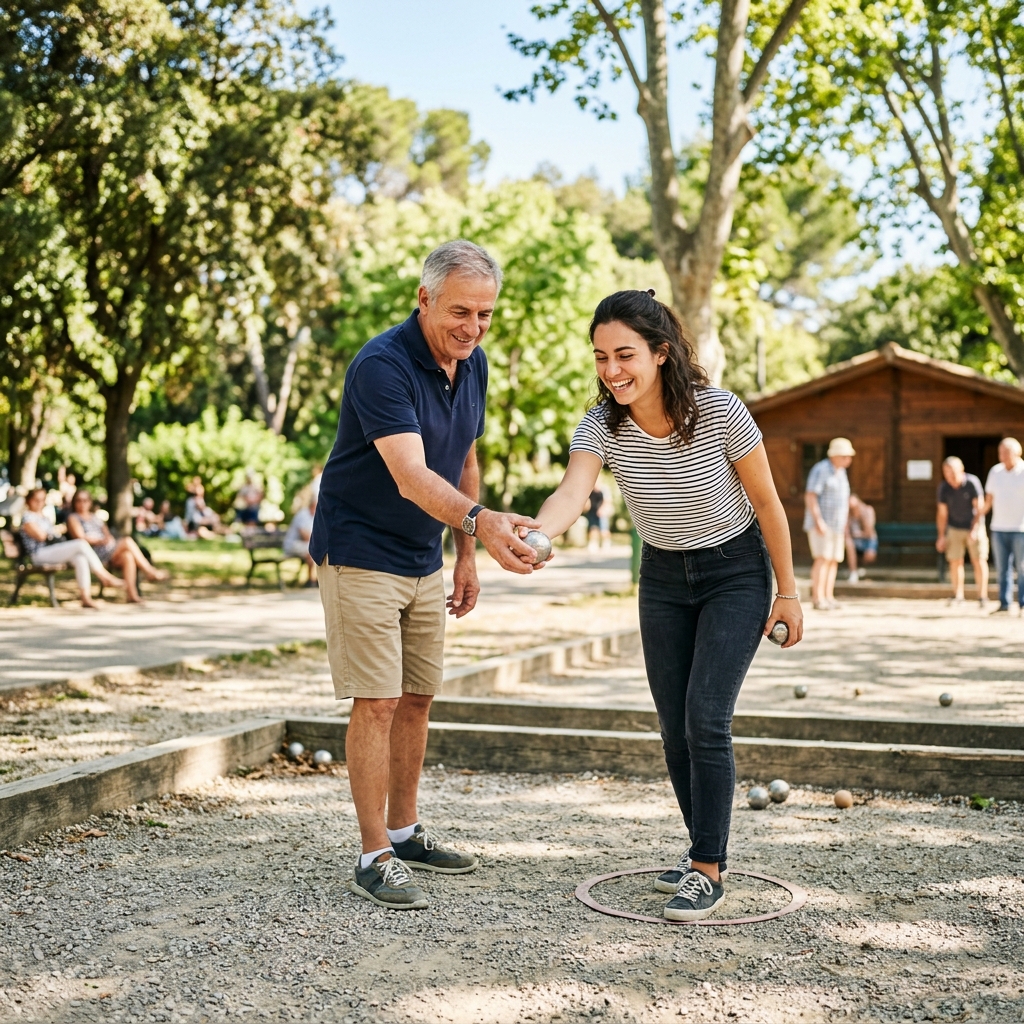
Beginner's Guide to Pétanque: Everything You Need to Know
New to pétanque? Learn the basics - how to play, what you need, scoring, and etiquette in this comprehensive beginner's guide.
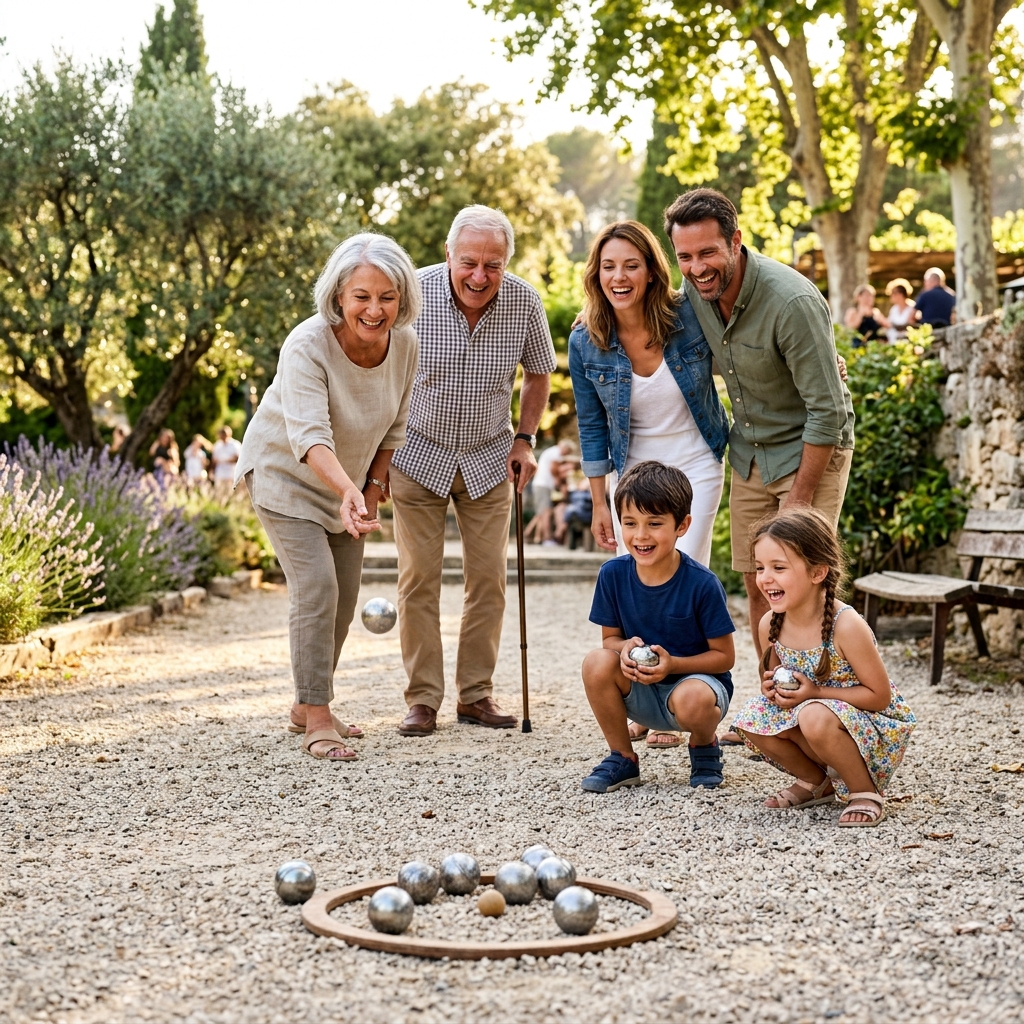
Pétanque for Kids and Families: Playing Together
Discover why pétanque is the perfect family sport, with kids' equipment picks, adapted rules for young players, and tips to get everyone playing together.
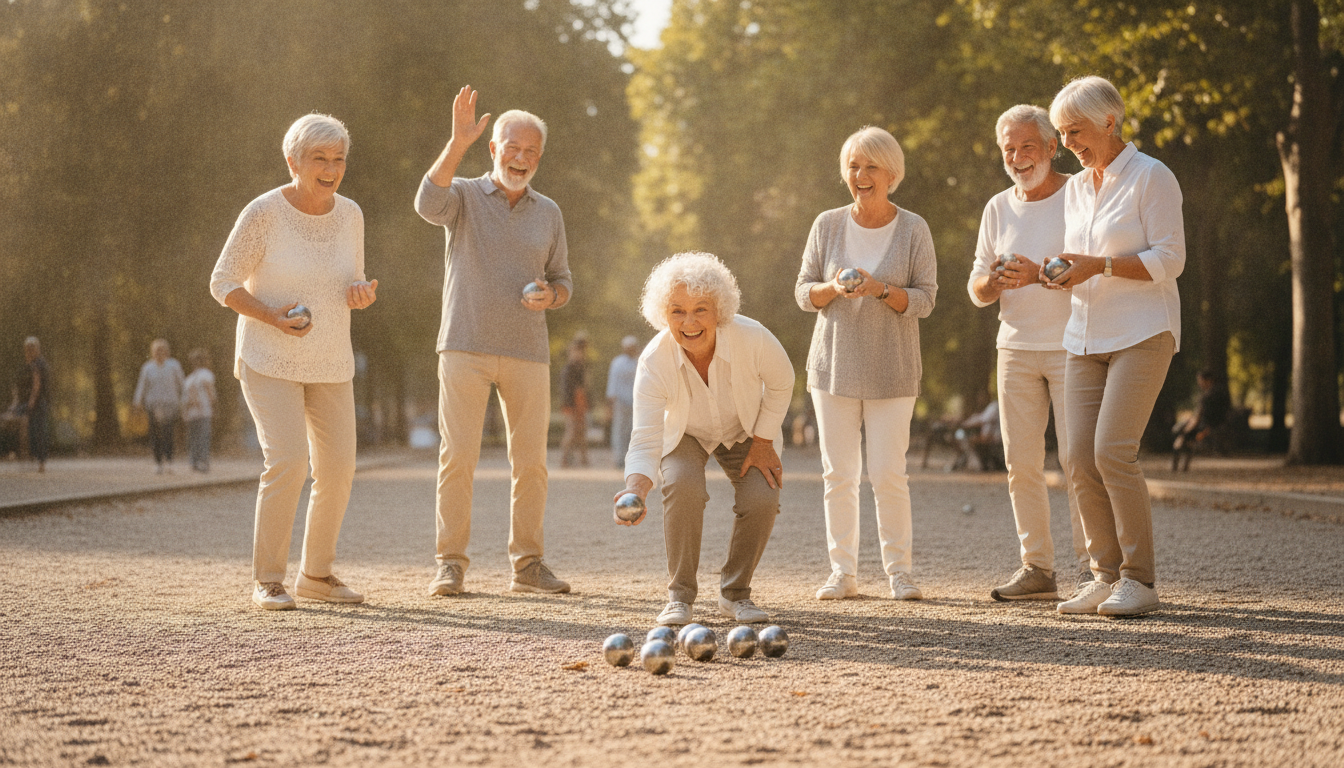
Pétanque for Seniors: Stay Active, Sharp, and Social
Why pétanque is one of the best sports for older adults: low-impact health benefits, adapted rules for limited mobility, and tips for choosing comfortable equipment.