
Beginner's Guide to Pétanque: Everything You Need to Know
New to pétanque? Learn the basics - how to play, what you need, scoring, and etiquette in this comprehensive beginner's guide.
Beginner's Guide to Pétanque: Everything You Need to Know
Welcome to the wonderful world of pétanque! Whether you've seen it played in a sunny village square in Provence or encountered it at a local park, pétanque is one of the most accessible, social, and strategic sports in the world.
This comprehensive guide will take you from complete beginner to confident player, covering everything from the basic rules to the essential unwritten etiquette.
What is Pétanque?
Pétanque (pronounced "pay-TONK") is a French boules sport that originated in 1907 in La Ciotat, Provence. The name comes from the Provençal expression pès tancats, meaning "feet fixed" or "feet planted" on the ground.
Today, the sport is played competitively in over 100 countries, culminating in the prestigious World Pétanque Championships held every year.
Unlike other boules sports like Bocce Ball or Lawn Bowls, pétanque is played with hollow metal balls and can be played on almost any natural surface. The goal is simple: throw your boules closer to a small wooden target ball than your opponent.
Essential Equipment
One of the best things about pétanque is its simplicity. You only need a few items to get started:
1. The Boules
- Leisure Boules: Often sold in sets of 6 or 8 in chrome-plated steel. Perfect for the backyard or beach.
- Competition Boules: Certified by the FIPJP (International Federation). They come in specific weights (650-800g) and diameters (70.5-80mm) to fit your hand.
- Quantity: You need 3 boules per player for singles and doubles, and 2 boules per player for triples.
Check our expert review of the Best Beginner Boules for 2026, or if you just want a casual family set, see our Best Pétanque Sets for Backyard & Garden Play 2026. Ready to buy your own set instead of borrowing? Our guide on how to choose your first pétanque boules walks through size, weight, and hardness step by step.
2. The Cochonnet (The Jack)
The target ball is a small wooden ball (usually boxwood or beech), 30mm in diameter. In French, it's called the cochonnet (little pig), but it's also known as the but (goal), bouchon (cork), or simply the jack. See our Best Cochonnets 2026 guide for wood, magnetic, colored, and light-up options.
3. The Measuring Tool
When boules are close, you'll need a tape measure or a specialized pétanque "tirette" to determine who is closer. In pétanque, accuracy is measured in millimeters!
4. The Circle
Players must stand inside a circle (35-50cm in diameter) when throwing. This can be drawn in the dirt or a prefabricated plastic circle can be used. See our full guide to pétanque court dimensions and setup if you're marking out a permanent terrain rather than just casual play.
5. Footwear
Any closed-toe, flat-soled sneaker works for casual play, but official FIPJP rules require fully enclosed shoes in sanctioned competition, ruling out sandals and open-back shoes. See our Best Pétanque Shoes guide for the rule in full and our top picks.
The Playing Surface (Terrain)
Pétanque is traditionally played on "natural terrain." You don't need a perfectly flat, manicured lawn. In fact, most players prefer a surface with some character:
- Hard-packed gravel: The standard for competitive play.
- Dirt or sand: Common in parks.
- Crushed stone: Offers a good balance of roll and stop.
Avoid very deep sand or thick grass, as the boules won't roll properly. The unpredictable nature of the ground is part of the game's strategy!
How to Play: The Basic Flow
- The Toss: Flip a coin to see which team goes first.
- The Circle: The starting team draws a circle and stands in it.
- The Jack: The first player throws the jack between 6 and 10 meters away.
- First Point: The same player throws their first boule, trying to get it close to the jack.
- The Opponent: A player from the second team steps into the circle and tries to "take the point" (get closer than the first team).
- The "Who's Down" Rule: The team that is not closest to the jack must keep throwing until they either take the point or run out of boules.
- The End: Once both teams have thrown all their boules, the score is counted. This completed round is called a mène (end).
Core Rules for Beginners
1. Feet on the Ground
The most important rule in the circle: both feet must remain entirely within the circle and stay on the ground until the thrown boule has touched the terrain. No "stepping into" the throw!
2. Valid Jack Placement
For a round to be valid, the jack must land:
- Between 6 and 10 meters from the circle.
- At least 50cm from the end line of the playing area or any obstacle (walls, trees).
3. Moving the Jack
If a boule or the jack is moved during play (e.g., by another boule), its new position is usually where it stays. If the jack is knocked out of the valid playing area, the round may be voided or points awarded based on remaining boules. Read more in our official rules guide.
Scoring Explained
Scoring in pétanque is simple but requires careful measurement:
- Only one team scores points in each mène.
- The scoring team receives 1 point for every boule that is closer to the jack than the opponent's closest boule.
- Winning: The first team to reach 13 points wins the match.
Example: If Team A has two boules closer to the jack than Team B's best boule, Team A scores 2 points.
For a deeper dive into measurement rules, dead jack scenarios, and the "Fanny" tradition, see our Detailed Scoring Guide.
Mastering the Basics: Techniques
The Grip
Hold the boule with your fingers together and palm facing down. This feels counter-intuitive to beginners who want to "underarm" it like a softball, but the palm-down grip allows you to add backspin, which is essential for control.
The Stance
You can throw while standing or crouching.
- Standing: Generally better for "shooting" or long-distance pointing.
- Crouching: Offers a better perspective of the ground's bumps and slopes, often preferred for precise "pointing."
Pointing (Placement)
Pointing is the act of throwing a boule to land near the jack.
- The Rolling (Roulette): A low throw that lands early and rolls most of the way.
- The Half-Lob (Demi-portée): A medium arc that lands about halfway and rolls the rest.
- The High Lob (Portée): A high, arching throw designed to land near the jack and stop quickly.
Discover more pointing techniques.
Shooting (Tir)
When an opponent has a boule very close to the jack, you may choose to "shoot" it-hitting their boule with yours to knock it away. This is the "high-risk, high-reward" part of the game!
Discover more shooting techniques.
Beginner Strategy
- Point First: As a beginner, focus on pointing. A boule in play is always better than a shot that misses everything.
- The "In Front" Rule: It is almost always better to be 50cm in front of the jack than 10cm behind it. A boule in front acts as an obstacle for your opponent; a boule behind is just a target.
- Read the Terrain: Before you throw, look at the ground between you and the jack. Is there a slope? A large stone? A soft patch? Choose your landing spot (the donnée) carefully.
Etiquette & Sportsmanship
Pétanque is famous for its "fair play" and social atmosphere. Follow these unwritten rules to be welcomed on any terrain:
- Respect the Thrower: When someone is in the circle, stay silent and still. Do not stand directly behind them or directly behind the jack.
- Wait to Measure: Never move a boule or the jack until both teams have agreed on the score.
- Acknowledge Skill: It's customary to say "Belle boule!" (Beautiful ball!) or "Bien joué!" (Well played!) when anyone makes a great shot.
- The "Fanny": If a team loses 13-0, they are said to have "made Fanny." In France, this traditionally involves a humorous ritual of kissing the bottom of a statue or picture named Fanny!
- Shake Hands: Always shake hands with your opponents before the first throw and after the final point.
For a deeper look at court positioning, dress code, and terrain courtesy, see our full guide to pétanque etiquette and the unwritten rules every player should know.
Frequently Asked Questions
Can I play on grass? Yes, but it's much harder. The boules don't roll, so you have to "lob" everything. Short-cut grass or "boules-style" turf is best.
What is a "Carreau"? A carreau is the perfect shot in pétanque: you shoot an opponent's boule, knock it away, and your boule stays exactly where the opponent's was. It's the "hole-in-one" of the sport. Running into other unfamiliar terms like mène or donnée? Our pétanque terminology glossary covers every French and English term you'll hear on the terrain.
How heavy should my boules be? Most beginners start with boules between 680g and 720g. Heavier boules are harder to move if hit, while lighter boules are easier to throw over long distances. See our complete guide to boule weight and size for how to measure your hand and pick the right fit.
Next Steps
Pétanque is a "minute to learn, a lifetime to master." To keep improving:
- Join a local club: Check our country guides to find federations and clubs near you. Can't find one nearby? Learn how to start a pétanque club of your own.
- Buy the right gear: See our top picks for the Best Beginner Boules.
- Find the perfect gift: Check out our Best Pétanque Gifts 2026 guide.
- Watch the pros: Search for "Masters de Pétanque" or "Mondial la Marseillaise" on YouTube.
- Practice your "donnée": Work on landing your boule on a specific spot every time.
- Enter your first tournament: Learn the difference between a casual melee and a competitive swiss or poule event in our tournament formats guide before you sign up.
Welcome to the community-we'll see you on the terrain! 🎯
Related Articles
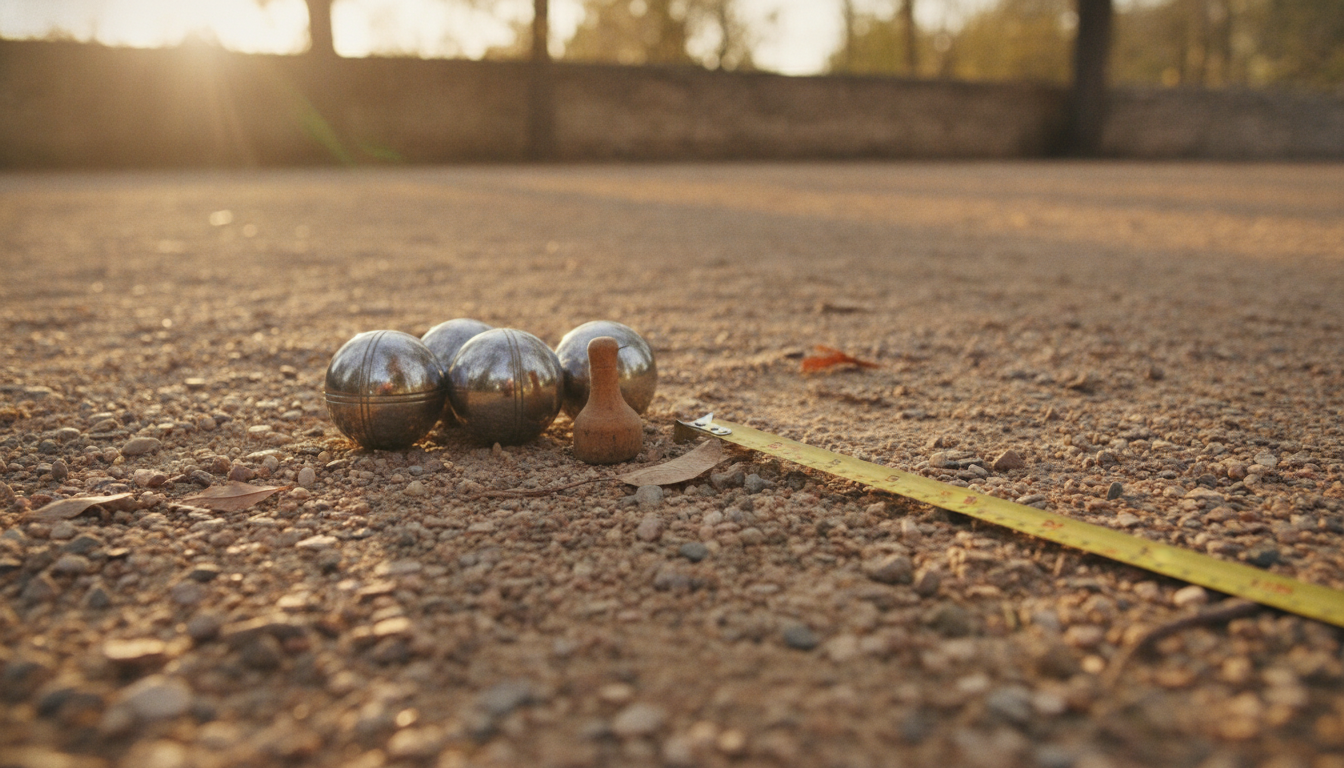
The Complete Pétanque Terminology Glossary: French & English
Master the language of pétanque with our comprehensive A-Z glossary. Learn every French and English term from 'Cochonnet' to 'Carreau' with detailed definitions.
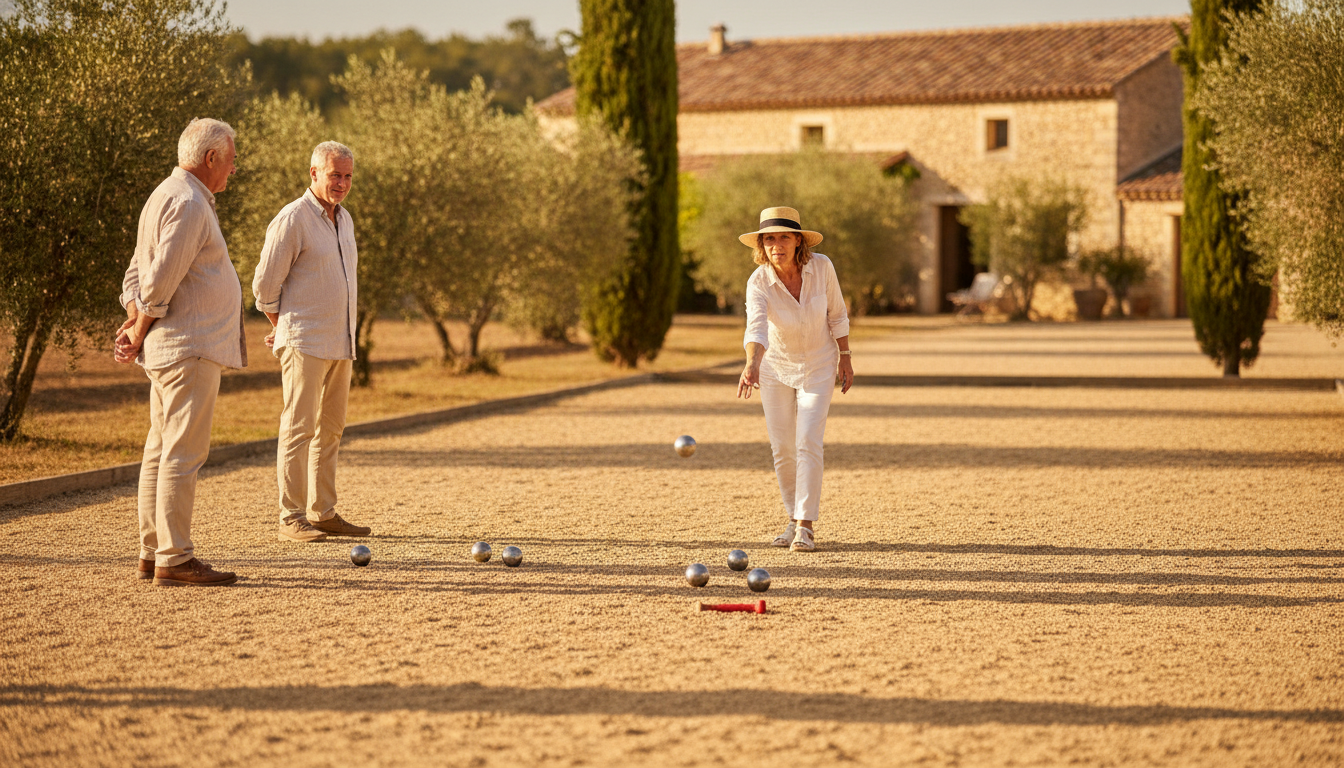
Pétanque Etiquette: The Unwritten Rules Every Player Should Know
The official rulebook doesn't cover where to stand, when to stay quiet, or who fills the holes. Here's the etiquette that keeps pétanque courts friendly worldwide.
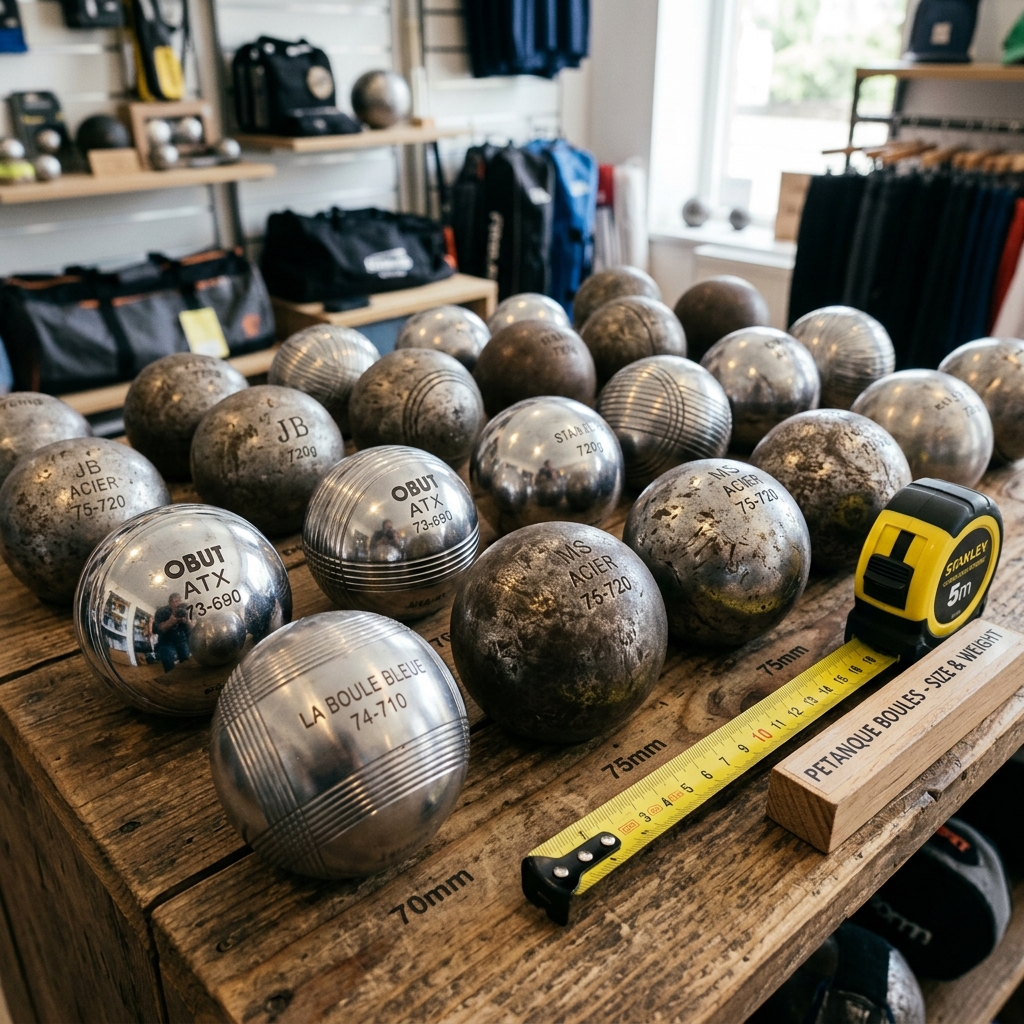
How to Choose Your First Pétanque Boules
A complete beginner's guide to selecting your first set of competition pétanque boules - size, weight, hardness, and material explained.