
Pétanque Court Dimensions and Setup Guide
Everything you need to know about official FIPJP pétanque court dimensions, marking rules, surface materials, and terrain setup for competitions and home play.
Pétanque Court Dimensions and Setup Guide
Whether you are preparing for an international tournament or building a court in your backyard, understanding the official dimensions and terrain requirements is essential. While pétanque can technically be played on any surface, competitive play follows strict regulations set by the Fédération Internationale de Pétanque et Jeu Provençal (FIPJP).
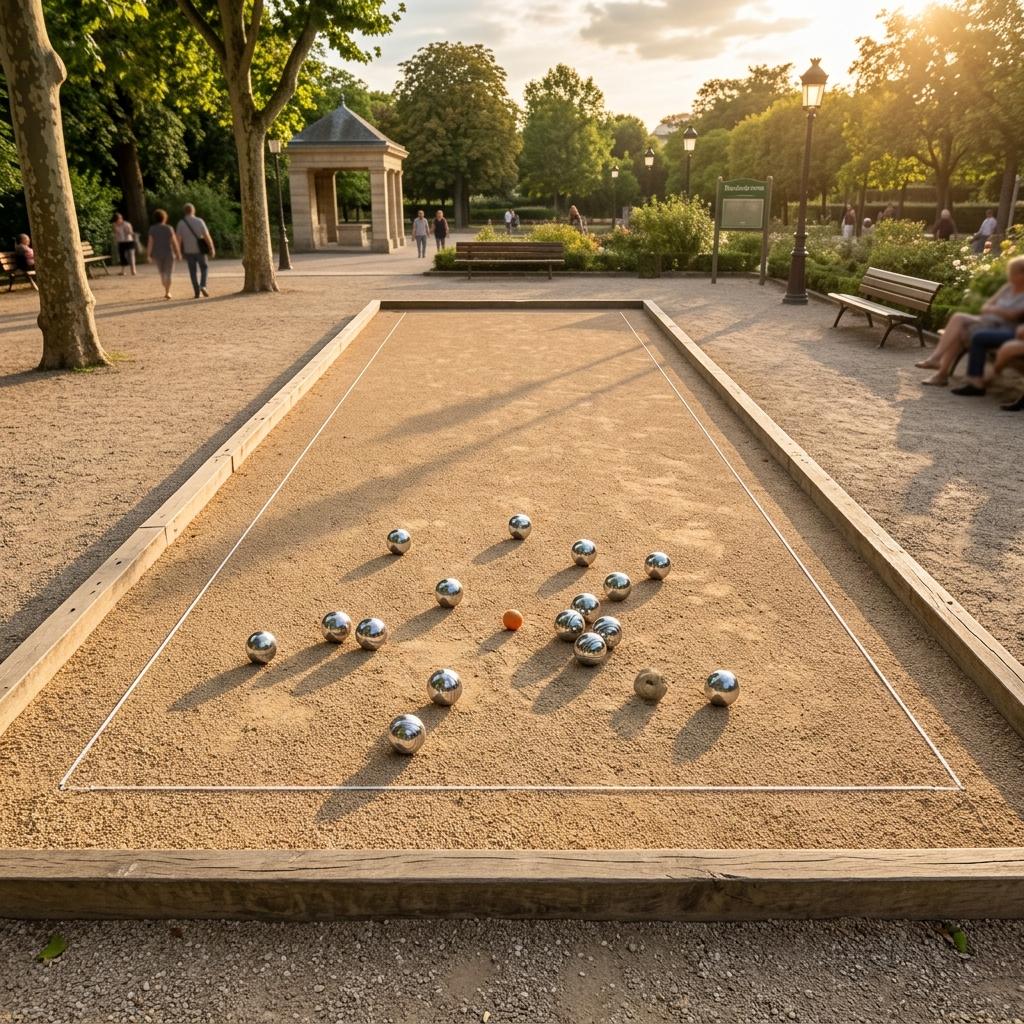
Official FIPJP Court Dimensions
In official competitions, the playing area is called the terrain. While the game is famous for being played in public squares and parks on "wild" terrain, tournaments require marked and defined courts.
Competition Standards
According to Article 5 of the official pétanque rules, the following dimensions apply:
| Competition Level | Length | Width | Total Area |
|---|---|---|---|
| International & National Championships | 15 meters | 4 meters | 60 m² |
| Regional & Club Tournaments | 12 meters | 3 meters | 36 m² |
| Minimum Authorized Dimension | 12 meters | 3 meters | 36 m² |
!IMPORTANT For national and international championships, the 15m x 4m dimension is mandatory. Individual federations may allow 12m x 3m for other authorized competitions.
Circle and Jack Placement Rules
Beyond the terrain's outer dimensions, Article 6 and Article 7 of the FIPJP rules set minimum clearances for where the throwing circle and the jack can be placed - these matter most on multi-lane club terrains, where several games run side by side.
| Rule | Minimum Distance |
|---|---|
| Circle from any obstacle | 1 meter |
| Circle from another circle or jack in use | 1.5 meters |
| Jack from any obstacle or the end line | 50 cm |
| Jack from another circle or jack in use | 1.5 meters |
Backyard and Recreational Courts
If you are building a court at home, you have more flexibility. However, to ensure a realistic playing experience, we recommend sticking as close to the official sizes as possible.
- Recommended Home Size: 12 meters x 3 meters. This allows for a full range of play while fitting into most gardens.
- Minimum Functional Size: 10 meters x 3 meters. Any smaller, and the game becomes restricted, as the jack (cochonnet) must be thrown between 6 and 10 meters.
- Clearance: Always allow at least 1 meter of clearance around the perimeter for players to move comfortably.
Terrain Surface Materials
Pétanque is traditionally played on hard-packed earth covered with a thin layer of gravel. The goal is to have a surface that is firm enough to walk on but uneven enough to make the boules' movement interesting.
Recommended Layers (Bottom to Top):
- Base Layer: 10-15 cm of coarse crushed stone or rubble (0/30 or 0/40 mm) for stability and drainage.
- Intermediate Layer: 5 cm of smaller crushed stone (0/10 or 0/20 mm), compacted well.
- Playing Surface: 2-5 cm of fine gravel or crushed stone (0/4 or 0/6 mm).
- Dolomite or Stabilized Sand are popular choices for a premium, consistent feel.
- Fine Grey Gravel is the classic choice for that traditional French look.
!TIP Avoid using beach sand or very deep gravel. The boules should roll and "bite" the ground, not bury themselves in it.
Marking and Boundaries
When a court is "marked and defined," the lines determine whether a boule or jack is still in play.
Dead Ball Lines (Out of Bounds)
Any boule or jack that completely crosses the boundary line is considered "dead" (out of play). In many tournaments, string lines are used. The rule is simple: if the boule is touching the string or the line, it is still in; if it has completely cleared it, it is out.
Barriers and Fencing
If your court is surrounded by a solid barrier (like a wooden board or a fence):
- Safety Clearance: FIPJP rules state that spectators' barriers must be at least 1 meter away from the exterior boundary line of the playing area.
- Backboards: Many club courts use low wooden boards (10-20 cm high) to keep boules from rolling away. These are not considered "barriers" in the sense of the safety rule but are part of the terrain setup.
Essential Setup Checklist
- Leveling: The court should be mostly level but with enough drainage to prevent puddles.
- Marking: Use string, chalk, or painted lines for clear boundaries.
- The Circle: Ensure you have a regulation circle - 35-50 cm in diameter if drawn or marked, or exactly 50 cm internal diameter if using a rigid prefabricated circle.
- Maintenance: Regularly rake the top layer to keep the gravel evenly distributed.
Where to Buy: Court Setup Essentials
A regulation throwing circle takes the guesswork out of marking your terrain and is legal for sanctioned play.
FIPJP Official Folding Circle
FIPJP ApprovedAn official 50cm internal diameter folding circle, FIPJP-approved and impact resistant. Ensures every player throws from the exact same spot, no more uneven circles scratched in the dirt.
Best Price: €15 - €20 · Obut
Ready to break ground? See our complete guide to building a backyard pétanque court for a full materials list and step-by-step layering instructions.
Frequently Asked Questions
Can I play pétanque on grass?
Technically yes, but it is not recommended. Grass absorbs the impact and prevents the boules from rolling correctly. Most competitive players avoid grass as it changes the mechanics of the game significantly.
What is the best height for an indoor court?
For indoor play, the ceiling should be at least 4 meters high to allow for high "lob" (plombé) shots without hitting the roof.
How do I mark a dead-ball line?
In casual play, you can simply agree on a boundary. In tournaments, a string is pulled tight and pinned to the ground. If a boule moves the string, it is usually considered dead if it passes the original line of the string.
Related Articles
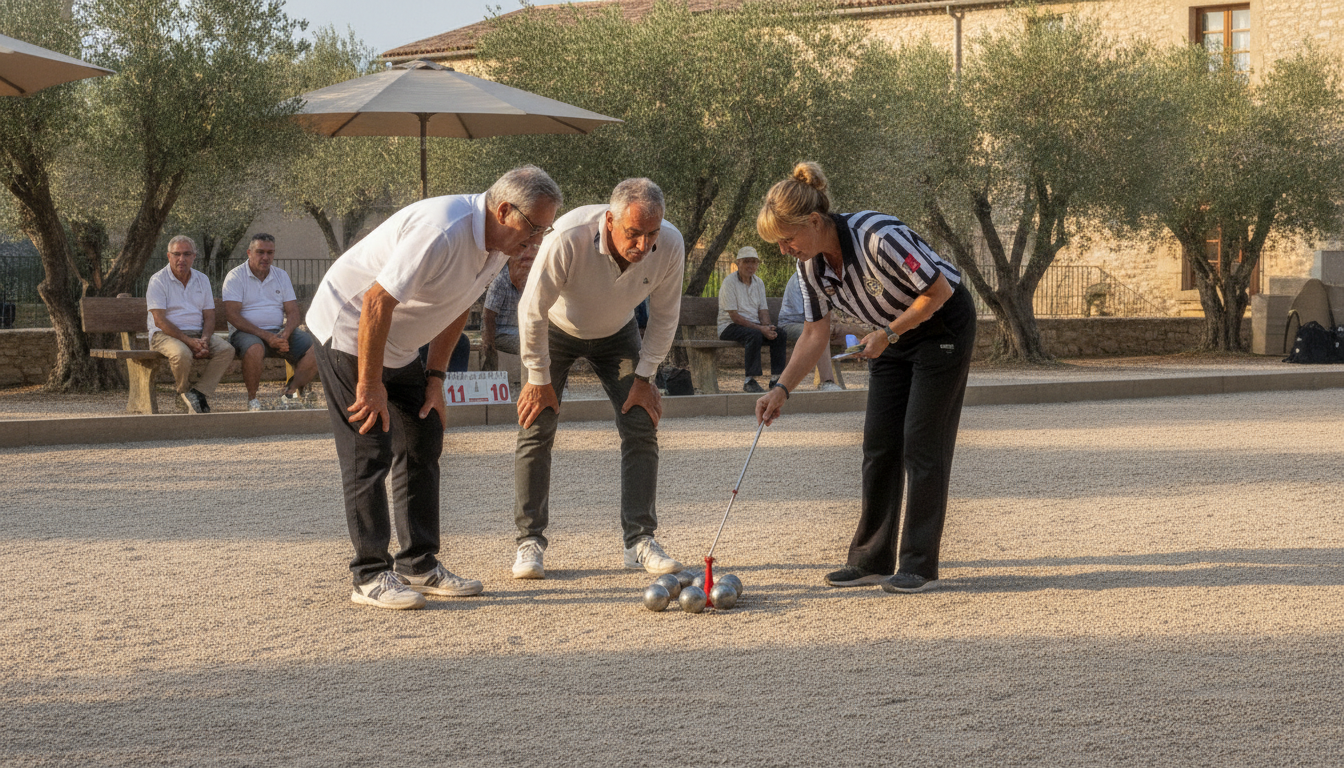
Official Pétanque Rules: The Complete 2026 FIPJP Guide
Master the official pétanque rules as defined by the FIPJP. Learn game formats, valid jack placement, the advantage rule, and tournament regulations.
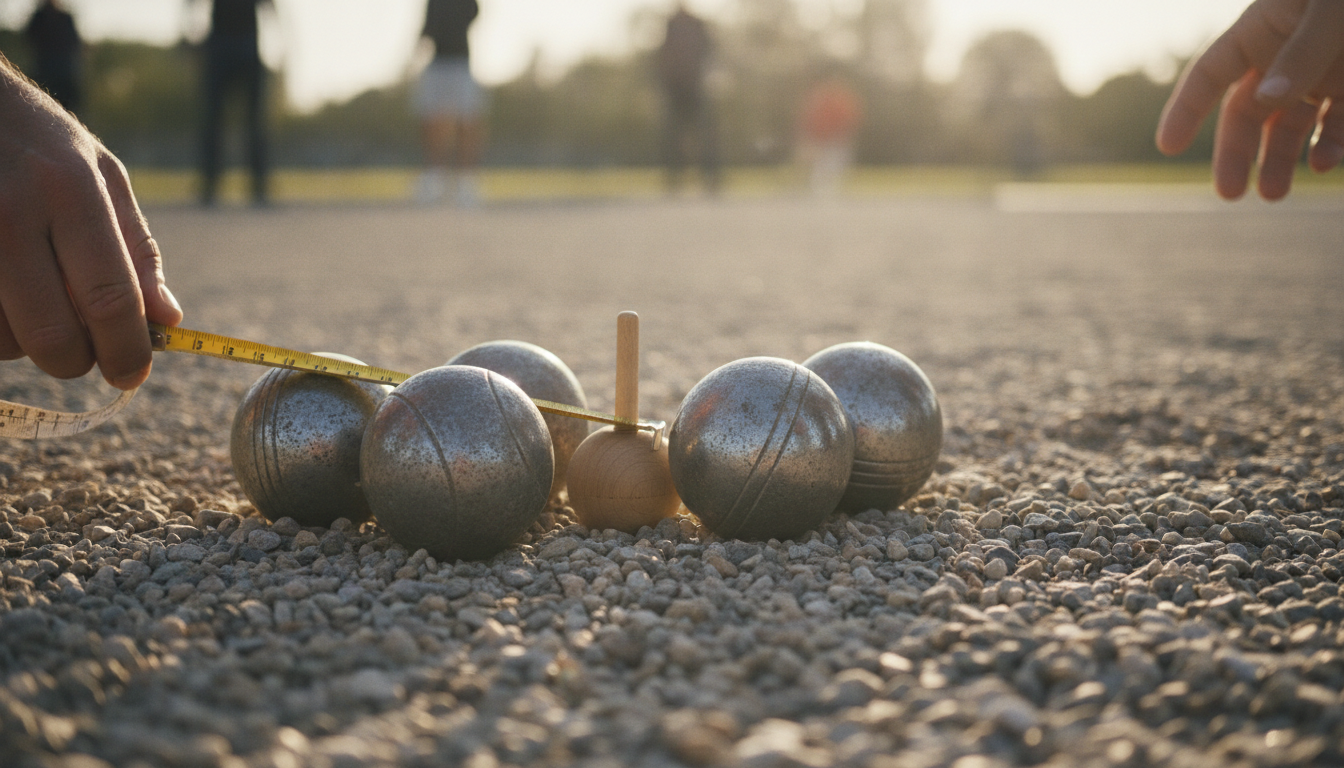
Pétanque Scoring Rules Explained: A Complete Guide
Master the art of counting points in pétanque. Learn basic scoring, dead jack rules, measurement etiquette, and the legendary Fanny tradition.
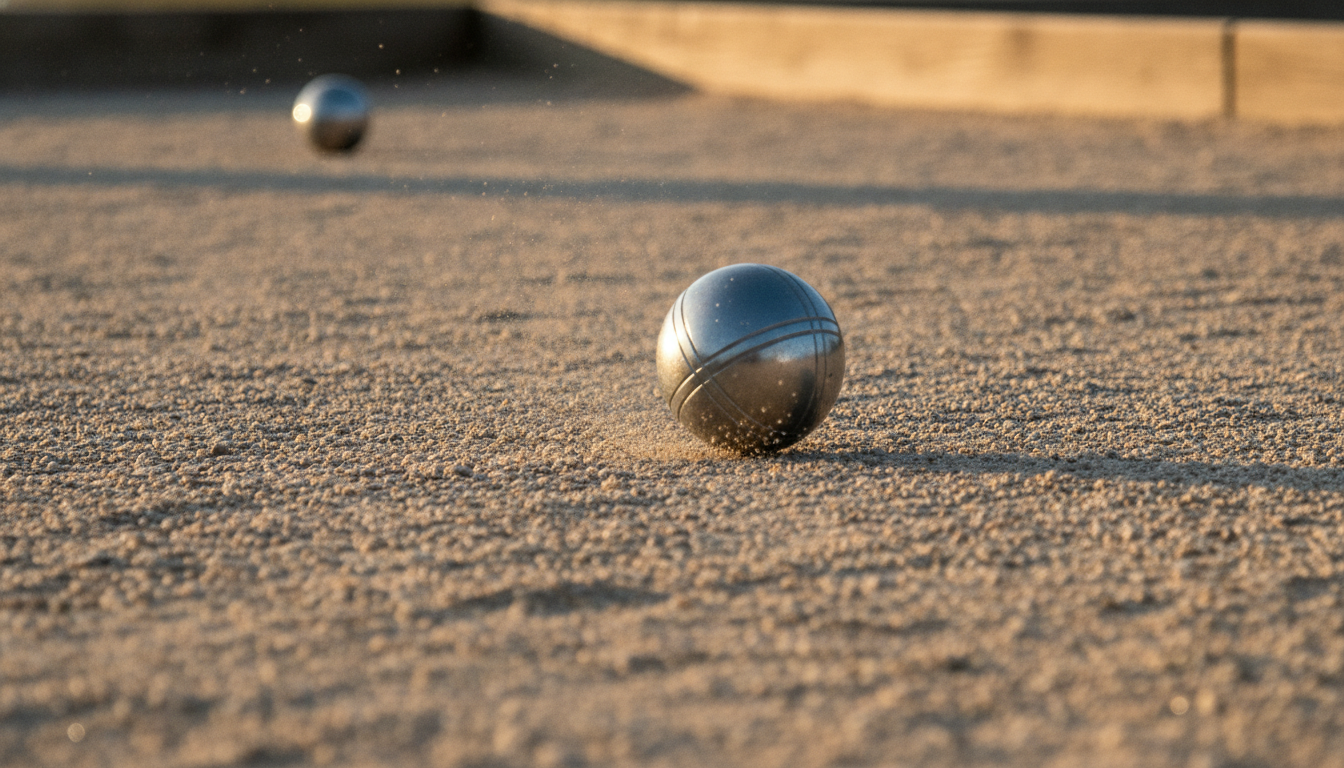
Pétanque Court Surfaces: How Terrain Changes Your Game
Gravel, sand, schist, clay, or rocky ground: every pétanque surface plays differently. Learn how to read a new court and adapt your technique before you throw.