
How to Choose Pétanque Boule Weight and Size: The Complete Guide
Selecting the right weight, diameter, and hardness is crucial for your pétanque performance. Learn how to measure your hand and choose the perfect boules for your style.
How to Choose Pétanque Boule Weight and Size: The Complete Guide
Choosing your first set of competition pétanque boules is a major milestone for any player. Unlike "leisure" sets found in toy stores, competition boules are sold in specific diameters and weights to fit your unique hand size and playing style.
A boule that is too large will strain your hand and lead to a poor release. A boule that is too light might be easy to throw but will bounce too much on impact. This guide will walk you through the three pillars of boule selection: Diameter, Weight, and Hardness.
1. Choosing the Right Diameter
The diameter of the boule is determined primarily by the size of your hand. If the boule is too big, you'll have to grip it too tightly, causing tension. If it's too small, it may slip out of your hand prematurely.
How to Measure Your Hand
There are two common methods to find your ideal diameter. You should measure your dominant (throwing) hand.
Method A: The Thumb-to-Middle Finger Spread
- Open your hand wide on a flat surface.
- Measure the distance from the tip of your thumb to the tip of your middle finger.
- Use the table below to find your starting diameter.
| Hand Measurement (cm) | Recommended Diameter (mm) |
|---|---|
| 16 - 17 cm | 71 mm |
| 18 - 19 cm | 72 - 73 mm |
| 20 - 21 cm | 74 - 75 mm |
| 22 - 23 cm | 76 - 77 mm |
| 24+ cm | 78 - 80 mm |
Method B: The Middle Finger Length
Measure your middle finger from the base crease (where it meets the palm) to the very tip.
- 7 - 8 cm: 71 - 72 mm
- 8 - 9 cm: 73 - 74 mm
- 9 - 10 cm: 75 - 76 mm
- 10+ cm: 77 - 80 mm
!TIPIf you are between sizes: Most experts recommend choosing the smaller diameter. A slightly smaller boule is easier to control and "tuck" into your palm for backspin.
Selection by Playing Position
- Pointers: Often prefer smaller diameters (71-74mm). A smaller ball has less surface area, making it a harder target for opponents to hit.
- Shooters: Often prefer larger diameters (74-78mm). A larger ball has a slightly higher "strike probability" when hitting an opponent's boule.
2. Selecting the Ideal Weight
Weight is a balance between physical comfort and how the ball reacts with the ground. FIPJP regulations allow weights from 650g to 800g.
Weight by Playing Position
| Position | Typical Weight | Why? |
|---|---|---|
| Pointer | 710g - 740g | Heavier boules "stop" faster and are harder for opponents to move. |
| Shooter | 670g - 700g | Lighter boules reduce arm fatigue during the high-energy shooting motion. |
| All-Rounder | 700g - 710g | A versatile weight that works well for both roles. |
General Guidelines
- Men: Most adult male players use 700g to 720g.
- Women: Most adult female players use 680g to 700g.
- Youth: Younger players (under 11) often start with 600g - 650g boules.
!IMPORTANT A boule that is too heavy for you will lead to fatigue over a long tournament (which can last 8-10 hours). If your arm feels "heavy" after 30 minutes of practice, your boules are likely too heavy.
Beyond fatigue, an overly heavy boule is a genuine injury risk: sports-medicine sources cite it as roughly doubling the risk of shoulder microtrauma compared to a properly sized one. See our Pétanque Injury Prevention Guide for more on avoiding overuse injuries like shoulder and elbow tendinitis.
3. Understanding Boule Hardness
Hardness describes how the metal was tempered. It affects the "rebound" (how much the ball bounces) and the "longevity" (how long it lasts before getting dented).
The Three Hardness Levels
- Hard (Dure): 140 kg/mm² (approx. 44+ HRC)
- Best for: Pointers on soft or sandy ground.
- Pros: Extremely durable, lasts for years.
- Cons: High rebound (bounces a lot) on hard ground.
- Half-Soft (Demi-Tendre): 120 kg/mm² (approx. 37 - 43 HRC)
- Best for: All-rounders.
- Pros: The perfect balance of durability and low rebound.
- Cons: None-this is the most popular choice worldwide.
- Soft (Tendre): 110 kg/mm² (approx. 35 HRC)
- Best for: Shooters.
- Pros: "Absorbs" the impact. Great for carreaux (staying in place after a hit).
- Cons: Dents easily ("marking") and may need replacement every 1-2 years of heavy play.
4. Material: Stainless Steel vs. Carbon Steel
Stainless Steel (Inox)
- Pros: Does not rust, low maintenance, smooth "velvety" feel.
- Cons: More expensive.
- Best for: Players who want a set that stays shiny and requires zero maintenance.
Carbon Steel
- Pros: Better "grip" for many players, slightly cheaper.
- Cons: Will rust if not maintained. Requires regular oiling or wiping.
- Best for: Players who like the "matte" feel of steel and don't mind the maintenance.
Want to Go Deeper?
- For a full breakdown of how carbon steel and stainless steel age over a season of play, see our dedicated guide to pétanque boule materials.
- Once you've picked a material, learn how to maintain your boules so they last for years, not seasons.
- Considering a second-hand set instead of buying new? Run through our guide to buying used pétanque boules first.
- Brand new to the sport? Our broader guide to choosing your first boules covers budget tiers and specific starter-set recommendations.
Summary Checklist for Your First Set
- Measure your hand using both the spread and finger length methods.
- Identify your role: Are you mostly pointing or shooting?
- Choose Inox if you hate rust, or Carbon if you want better grip.
- Pick Half-Soft for your first competition set-you can't go wrong.
Ready to find your perfect set? Check out our Best Competition Boules 2026 review for top-rated recommendations.
Related Articles
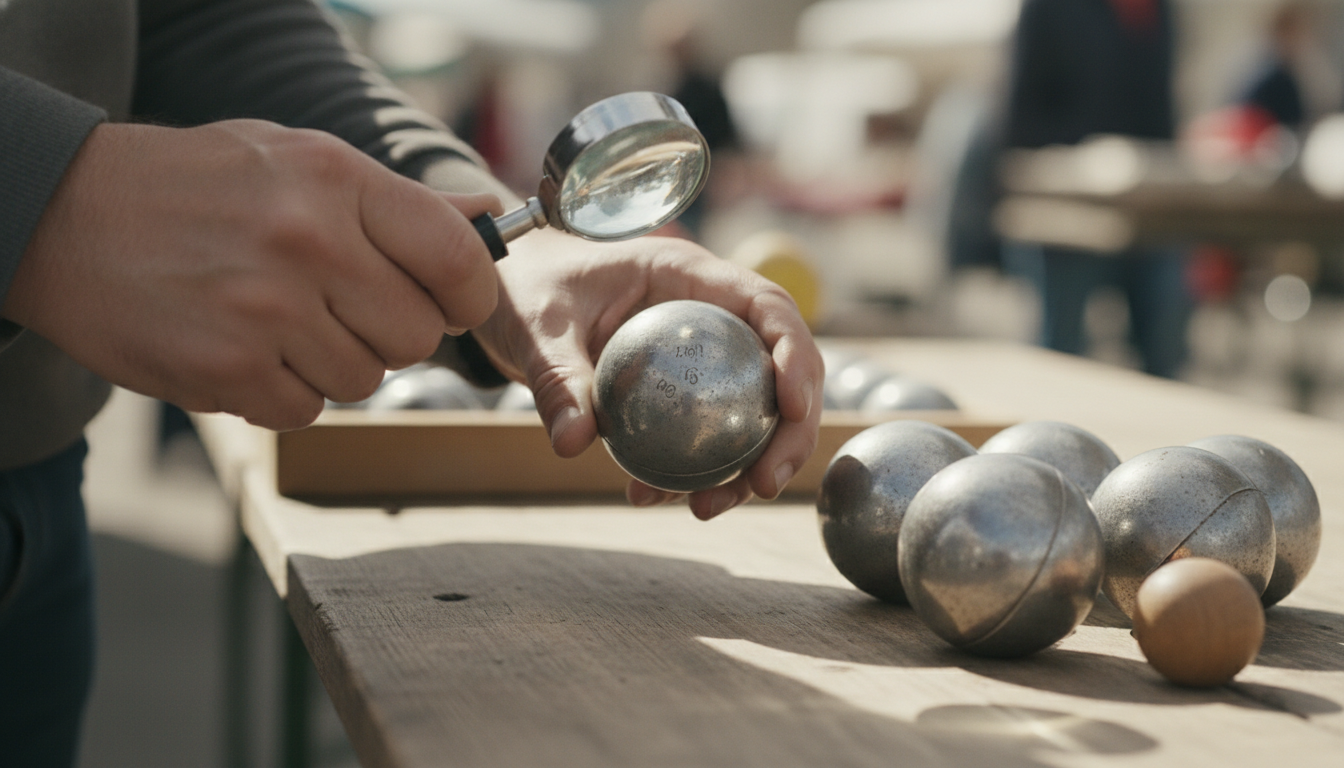
Buying Used Pétanque Boules: A Buyer's Checklist
How to buy second-hand competition pétanque boules safely - reading engravings, spotting a fair price, and the red flags that mean walk away.
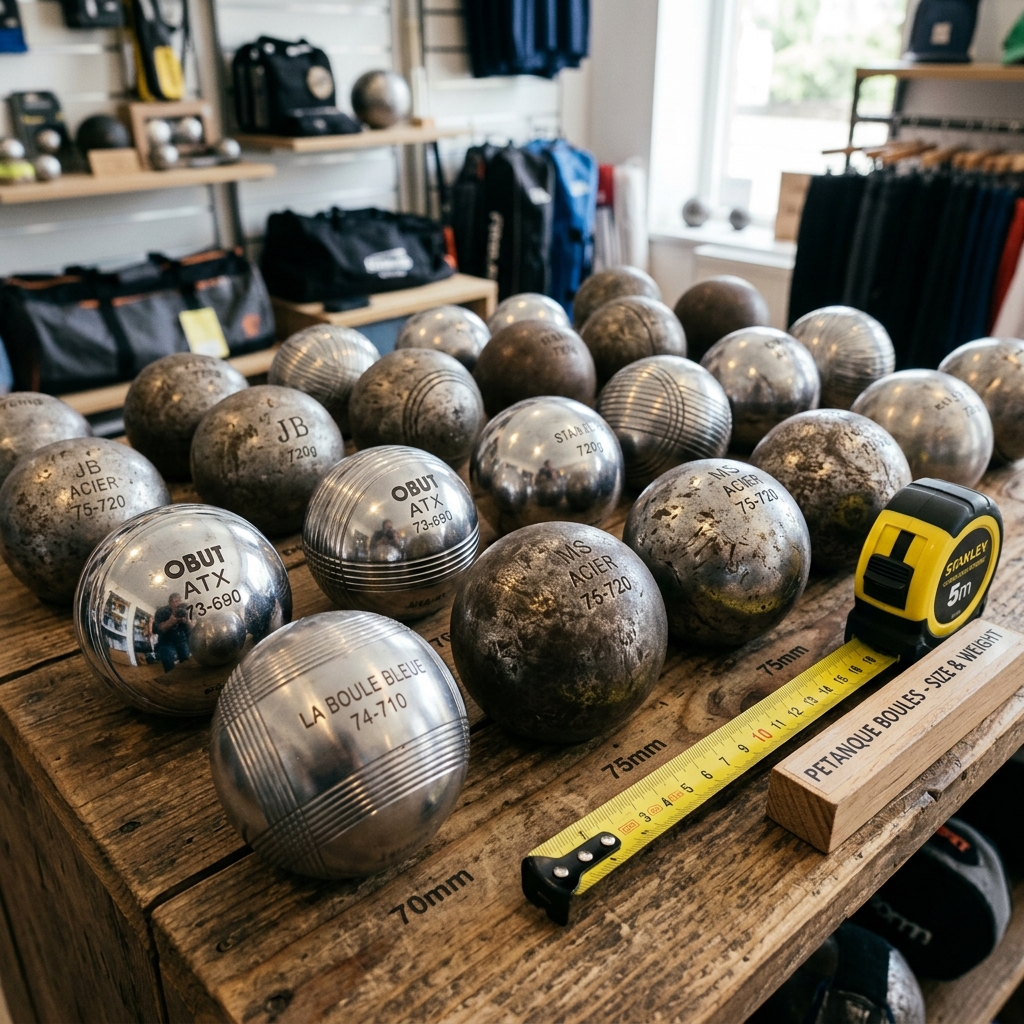
How to Choose Your First Pétanque Boules
A complete beginner's guide to selecting your first set of competition pétanque boules - size, weight, hardness, and material explained.
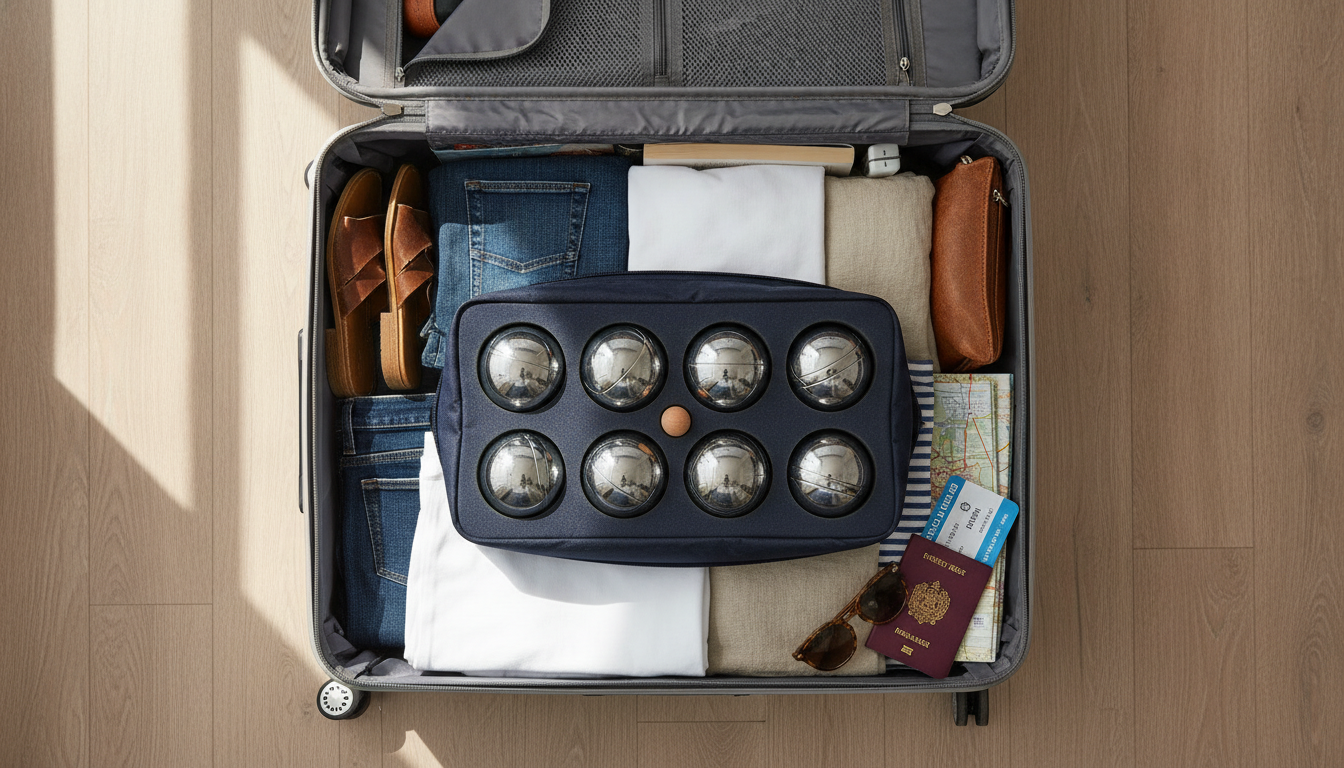
Traveling With Pétanque Boules: A Flying and Packing Guide
Can you take pétanque boules on a plane? Here's how airport security classifies them, how to pack a set for checked baggage, and how to avoid overweight fees.