
Pétanque Injuries: Common Causes, Health Benefits, and How to Prevent Them
Pétanque looks gentle, but repeated throwing adds up. A practical look at elbow, shoulder, knee, back, and ankle strain, plus a simple warm-up and clear advice on when to see a doctor.
Pétanque Injuries: Common Causes, Health Benefits, and How to Prevent Them
Pétanque has a reputation as one of the gentlest sports around, and in many ways it earns it: no running, no jumping, no contact. But a full match still asks the shoulder, elbow, knee, and ankle to repeat the same motions dozens of times, and over a season that repetition can catch up with players who never warm up or never think about their throwing form. This guide covers what reliable sources say about pétanque's health benefits, the strains players most often run into, and the warm-up and technique habits that help keep them away. One caveat up front: there is very little published research on pétanque injuries, so treat any precise injury statistic you come across with caution.
The Health Benefits Are Real
Before getting into injuries, it's worth being clear that pétanque is, on balance, a healthy activity. France's VIDAL Médicosport-Santé reference, a medical guide produced with the French Olympic committee (CNOSF) to support physical-activity prescriptions, rates its benefits as follows:
- Joint mobility without impact. VIDAL rates flexibility and joint mobility as a moderate benefit. With no running or jumping, pétanque remains playable well into older age.
- Light physical activity. VIDAL rates the endurance and muscle-strength benefits as modest. Walking to and around the terrain adds some light activity, but pétanque doesn't replace brisk walking, cycling, or other aerobic exercise.
- Balance and proprioception. Standing steady in the circle to release a boule precisely works your balance, which VIDAL rates as a moderate benefit. For fall prevention, the WHO recommends that older adults do dedicated balance and strength training, so treat pétanque as a complement rather than a substitute.
- Mental and social engagement. This is where VIDAL rates pétanque highest: concentration, memory, decision-making, and social interaction. Judging distance, reading terrain, and deciding whether to point or shoot keeps the mind working through an entire match.
If you're specifically interested in pétanque as an active-aging activity, see our dedicated guide to Pétanque for Seniors, which covers adapted rules, equipment, and age-specific safety tips in more depth. VIDAL's own guidance notes there are few absolute medical contraindications to playing, though an unstabilized chronic condition or a recent acute injury is a reason to check with a doctor before returning to the terrain.
The Injuries That Actually Show Up
No reliable figures exist on how often pétanque players get injured, and VIDAL's pétanque entry doesn't list specific sports injuries. The problems below are the overuse and terrain-related strains players most often describe, and they follow the same patterns seen in other repetitive or outdoor activities.
Elbow and Shoulder Tendinitis
This is the one pétanque players hear about most. In doubles each player throws three boules per end (two each in triples), and a game to 13 often runs to a dozen ends or more, so a single game means dozens of throws. Repeating that gripping and throwing motion, especially with a stiff, locked arm rather than a relaxed follow-through, can irritate the tendons around the elbow and shoulder. The elbow version is lateral epicondylitis, better known as tennis elbow, which the NHS links to activities that involve gripping and repeatedly twisting the wrist and forearm. Shooters (tireurs), whose throw is faster and more forceful, may load these tendons more than pointers do. Shoulder strain follows the same overuse pattern and is likely to be worse with a boule that's too heavy for the player's hand and strength.
Knee Strain in Pointers
Pointers (pointeurs) often throw from a crouched or bent-knee stance to place boules precisely. Repeating that position many times a match, match after match, can aggravate knee discomfort, particularly for players who already have knee problems. Pointing from a standing position is a perfectly valid alternative if crouching hurts.
Ankle Sprains
Pétanque courts are gravel, sand, or packed dirt, and that surface is naturally less even than a gym floor or a paved path. A sudden misstep or twist while moving between throws is the usual way a sprain happens, as on any natural outdoor surface. Closed-toe shoes with a flat, stable sole and a little attention to your footing on unfamiliar courts are the simplest prevention.
Lower Back Strain
Every mène (round) ends with players bending down repeatedly to pick up boules and the jack. On its own, one bend is nothing, but doing it dozens of times across a long tournament day, especially without straightening up between throws, can add up to lower back strain. A boule magnet on a pole removes most of that repeated bending if it's ever been an issue for you.
What Raises Your Risk
- A boule that's too heavy. An overly heavy boule makes the arm and shoulder work harder to control and release it on every throw, adding to the repetitive load behind overuse strain. See our full Boule Weight and Size Selection Guide for how to choose a boule matched to your hand and strength; it's a sensible injury-prevention step, not just a performance one.
- Skipping the warm-up. No study has measured the effect of warming up on pétanque injuries, but the French pétanque federation's medical adviser recommends warming up as for any sport, and it costs only a few minutes. Skipping it because a casual game "isn't real exercise" is exactly the habit that lets overuse strain build up.
- Going too hard, too soon. Jumping straight into long, intense matches without any base fitness, especially early in the outdoor season after a quiet winter, raises the risk of strain across the board.
- Extreme heat. Heat exhaustion and heatstroke are the main summer risks. VIDAL advises against playing above 30°C and recommends avoiding the hottest hours of the day. See our guide to Playing Pétanque in Hot Weather for hydration and timing tips.
- A stiff, forced throwing arm. Locking the elbow and forcing the boule's distance rather than letting the arm follow through naturally puts more strain on the same tendons that overuse already targets.
A Simple Pre-Game Warm-Up Routine
A proper warm-up doesn't need to take long. Five to ten minutes covering the following is enough to prepare the joints that do the most work in pétanque:
- Get the blood moving. A brisk five-minute walk or light jog raises your heart rate and warms up muscles generally before you touch a boule.
- Loosen your legs. Heel-to-glute kicks and standing knee raises, done for 20-30 seconds each, prepare the hips and knees for a match's worth of bending and crouching.
- Rotate your shoulders and hips. Slow, controlled arm circles and hip rotations work through the throwing shoulder's full range of motion before it's asked to release a boule with any real force.
- Rotate your wrists. Stand with your arms relaxed at your sides and rotate each wrist in both directions, this small joint absorbs more of the release motion than most players realize.
- Take a few easy practice throws. Finish with several throws at increasing intensity rather than going straight into full-effort shooting on your first attempt of the day.
Technique Adjustments That Reduce Strain
- Keep a relaxed grip. A light but controlled hold on the boule, rather than clamping down, reduces tension that travels up through the wrist and elbow.
- Let the arm follow through. Avoid a stiff, locked-elbow throw. Accompany the release naturally rather than forcing distance with a rigid arm.
- Don't overreach on distance. FIPJP rules set the jack's distance at 6 to 10 meters for standard adult play, chosen anew each end rather than split by leisure versus competition. If long ends strain your shoulder, especially with a heavy boule, there's no shame in throwing the jack toward the shorter end of that range when it's your team's turn.
- Choose the right equipment. Beyond weight, a diameter that fits your hand (see our Boule Weight and Size Selection Guide) means you're not gripping too hard just to hold on. Our Best Pétanque Boules for Beginners guide highlights easy-grip options for newer or returning players.
When to Rest, and When to See a Doctor
Mild soreness after a long tournament day is normal and usually settles with rest. If a joint stays painful for more than a few days, swells, or hurts enough to change how you throw, stop playing and rest it rather than pushing through. For elbow pain, the NHS advises seeing a GP if it hasn't improved after at least two weeks of rest and self-care. Stop immediately and seek medical help for chest pain, palpitations, unusual breathlessness, fainting, or a sudden severe headache, which VIDAL lists as warning signs during play. If you have a heart condition, diabetes, or another chronic illness, check with your doctor before taking up regular play, the same commonsense precaution recommended before starting any new regular physical activity.
The Bottom Line
Pétanque's relaxed pace is real, and so are its health benefits, but "gentle" doesn't mean "risk-free" once you're playing regularly. A few minutes of warm-up, boules that actually fit your hand and strength, and a relaxed throwing motion cover most of the strain you can actually prevent, leaving you free to enjoy the parts of the game that made you pick up a boule in the first place. For the fundamentals of the throw itself, see our Beginner's Guide to Pétanque.
Related Articles

5 Tips for Playing Pétanque in Hot Weather
Stay sharp and play your best game even when temperatures soar. Essential tips for summer pétanque.
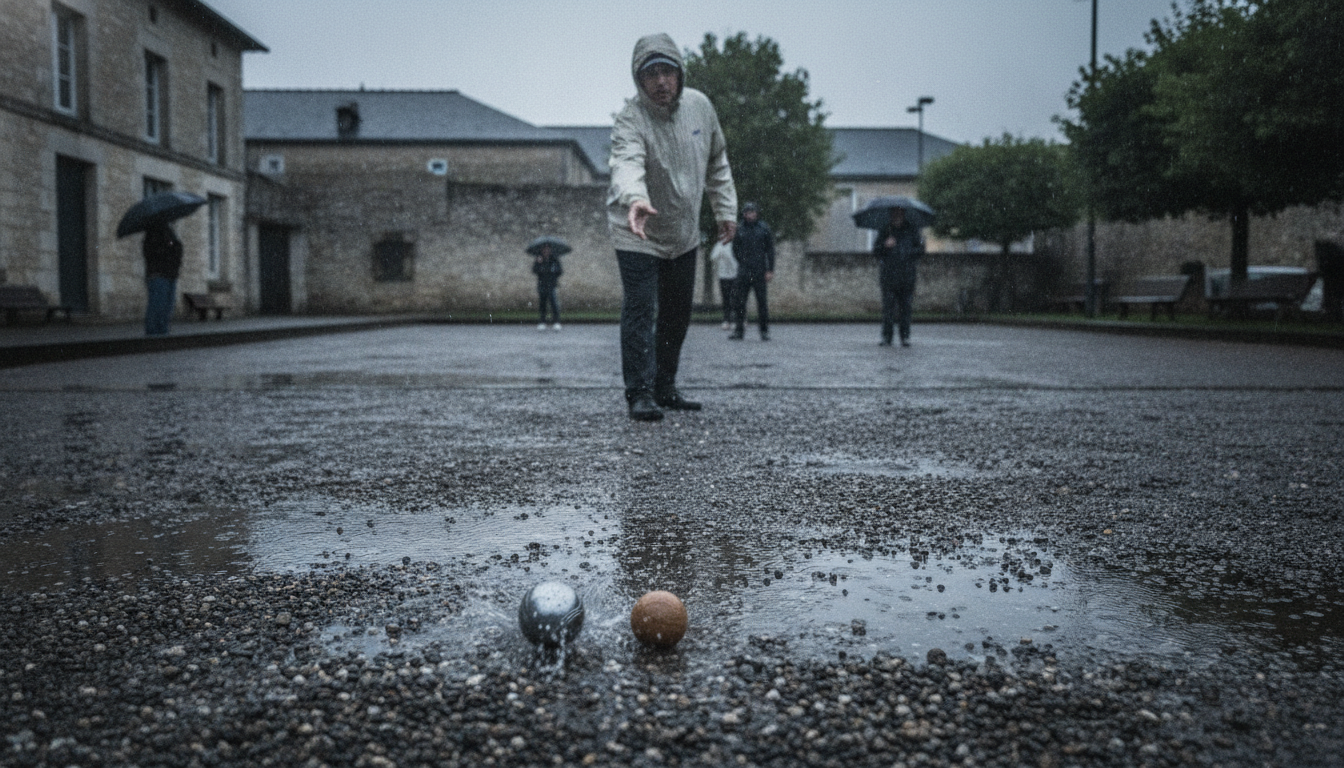
Playing Pétanque in Rain and Wet Weather: 6 Adjustments That Matter
Rain does not have to end your game. Learn how wet terrain changes boule behavior and the equipment, technique, and maintenance adjustments experienced players make.
Petanque Coach on YouTube: Free Coaching Tips, Interviews, and a Learning Community
A closer look at the Petanque Coach YouTube channel - its tip series and player interviews - plus the free Petanque Performance Academy community it runs on Skool.