
Buying Used Pétanque Boules: A Buyer's Checklist
How to buy second-hand competition pétanque boules safely - reading engravings, spotting a fair price, and the red flags that mean walk away.
Buying Used Pétanque Boules: A Buyer's Checklist
New competition boules run anywhere from about EUR70 for an entry-level set to EUR300+ for a flagship model (see our guide to choosing your first boules). Steel boules do not wear out quickly, so a well-cared-for used set can play just as well as new for a fraction of the price - as long as you know what to check before you hand over any money. This guide covers where to find used boules, how to read the engravings that prove a set is genuine and legal, the checks to run in the first five minutes, and the point at which a "bargain" is actually a set to walk away from.
Where to Find Used Pétanque Boules
- Your local club. Players who move up to a different weight or hardness, or who leave the sport, often sell or hand down their old sets. This is the safest source: you usually know the seller, can ask about the set's history, and can test-throw it on a familiar terrain before buying.
- Flea markets and vide-greniers. Common in France, where pétanque sets turn up regularly at local brocantes and vide-greniers alongside other secondhand sporting goods.
- Online classifieds. Leboncoin (France), eBay, Facebook Marketplace, and Marktplaats (Netherlands) all carry a steady supply of used boules, with prices spanning a huge range - from a couple of euros for a single mismatched boule to several hundred for a rare, complete competition set. Photos and the seller's description are all you have to go on before buying, so ask for close-up shots of the engravings and any rust or dents.
- Verified second-hand programs from retailers. Some pétanque-specialist retailers run their own second-hand sections and inspect stock before reselling it. PetanqueShop, for example, states that its second-hand balls "are in good condition" and are verified in its own workshop before being listed - a useful middle ground between a total stranger's classified ad and full retail price.
Read the Engravings Before You Buy
Every genuine competition boule is required to carry two pieces of information stamped into the steel: the manufacturer's name and the boule's weight. Many also carry a model number. This isn't just a maker's mark - it's the mechanism umpires use to catch illegally "stuffed" or tampered boules, since the rules cap the difference between the stamped weight and the boule's actual weight at plus or minus 5 grams.
That gives you two quick checks before buying:
- Is there an engraving at all, and can you read it? No engraving, or one worn past legibility, usually means you're looking at a mass-market leisure boule (the kind sold in toy shops and supermarkets) rather than an FIPJP-homologated competition boule. Leisure boules are perfectly fine for a casual game in the garden, but they aren't legal for club or tournament play - see our official rules guide for the full competition boule specification.
- Does the actual weight match the stamp? Bring a small scale (a kitchen or postal scale works) and weigh each boule. If it's off from the engraved figure by more than 5 grams, treat that as a red flag rather than a rounding error - it's exactly the kind of discrepancy an umpire is trained to catch, and it isn't something you want to discover mid-tournament.
The Five-Minute Physical Inspection
Once you've confirmed the engravings check out, run through this before you buy:
- Roundness. Roll each boule across a flat, level surface (a table works). A boule that's still round will roll straight and steady; one that wobbles has lost its shape and won't perform predictably, no matter how good the price is.
- Rust and pitting. A light surface patina on carbon steel boules is normal, and plenty of players actually prefer the grip it gives - see our boule maintenance guide for more on managing it. What you're checking for here is deeper: pitting you can feel with a fingernail, or rust that flakes off in chunks rather than wiping away, which usually means the surface is permanently compromised.
- Flat spots and dents. Run a finger slowly over the whole surface feeling for flats from repeated hard impacts against other boules or the ground. A flat spot changes how a boule releases and rolls.
- Consistency across the set. A set of 3 (for singles/doubles) or 6 (for a shared triplette set) should share the same manufacturer, model, and weight stamp. A mismatched set - even if every individual boule passes the checks above - will behave a little differently boule to boule, which is exactly the inconsistency a serious set is meant to avoid.
- Verify the numbers yourself. Don't just trust the listing. If you're buying in person, bring calipers to check the diameter and a scale to check the weight against the stamp.
Professional Pétanque Compass (Calipers)
Precision CheckStainless steel calipers for checking boule-to-boule diameter and settling close measurements - also useful for verifying a used boule's diameter before you buy.
Best Price: €25 - €32 · PetanqueShop
Pétanque Thickness Gauge Measuring Set (20 blades)
Referee ToolA referee-grade feeler-blade gauge for measuring very short gaps - handy for double-checking a boule's true diameter when a listing's numbers look off.
Best Price: €8.83 · PetanqueShop
Pricing: What's a Fair Price for Used Boules?
As a rough guide, expect to pay 40-60% of the equivalent new price for a used set in good condition with normal wear but no structural issues:
- A used Obut Match set (around EUR93 new) typically changes hands for roughly EUR35-55.
- Verified second-hand competition sets from dedicated resellers commonly list anywhere from about EUR58 up to EUR200+, depending on the model and condition - some second-hand competition boules hold their value surprisingly well simply because steel doesn't wear out the way, say, a tennis racquet does.
- A complete boxed set with its original case and a matching cochonnet is worth more than the same boules sold loose and mismatched.
- Prices on general classifieds (Leboncoin, eBay, Marketplace) swing far more widely, since they mix everything from a single odd boule sold for a couple of euros to rare, near-new competition sets - treat any single listing's price as a data point, not a benchmark, and compare a few before deciding what's fair.
Red Flags: When to Walk Away
- No engraving at all on a set being sold as "competition" boules, or a seller who can't explain why it's missing.
- A weight that doesn't match the stamp by more than 5 grams - this is the specific discrepancy the weight-mark system exists to catch.
- Heavy rust that flakes off, rather than a light, even patina.
- A mismatched set - different brands, models, or weight stamps across boules meant to be sold as a set.
- A seller who won't let you handle, weigh, or roll-test the boules before you pay, for an in-person sale. For an online purchase, be equally cautious of a listing with no close-up photos of the engravings.
After You Buy: Restoring Used Boules
A used set with light surface rust or grime is usually a quick fix, not a dealbreaker. Our full boule maintenance guide covers the process in detail - a vinegar soak or a soft wire brush for surface rust, fine 400-600 grit sandpaper for anything more stubborn, and a light coat of oil afterward to protect carbon steel going forward.
Obut Boule Maintenance Product (Anti-Rust Spray)
Anti-RustReady-to-use spray to clean and protect boules after a restoration pass, leaving a protective film that helps prevent rust from coming straight back.
Best Price: €11.00 · Obut
When to Buy New Instead
If the used market near you is thin, or you already know exactly which weight, hardness, and striation pattern suits your game, buying new guarantees you get precisely that spec rather than whatever happens to be for sale locally. Our guides to choosing your first boules and the best boules for beginners in 2026 cover how to pick the right new set if that's the better route for you.
Related Articles
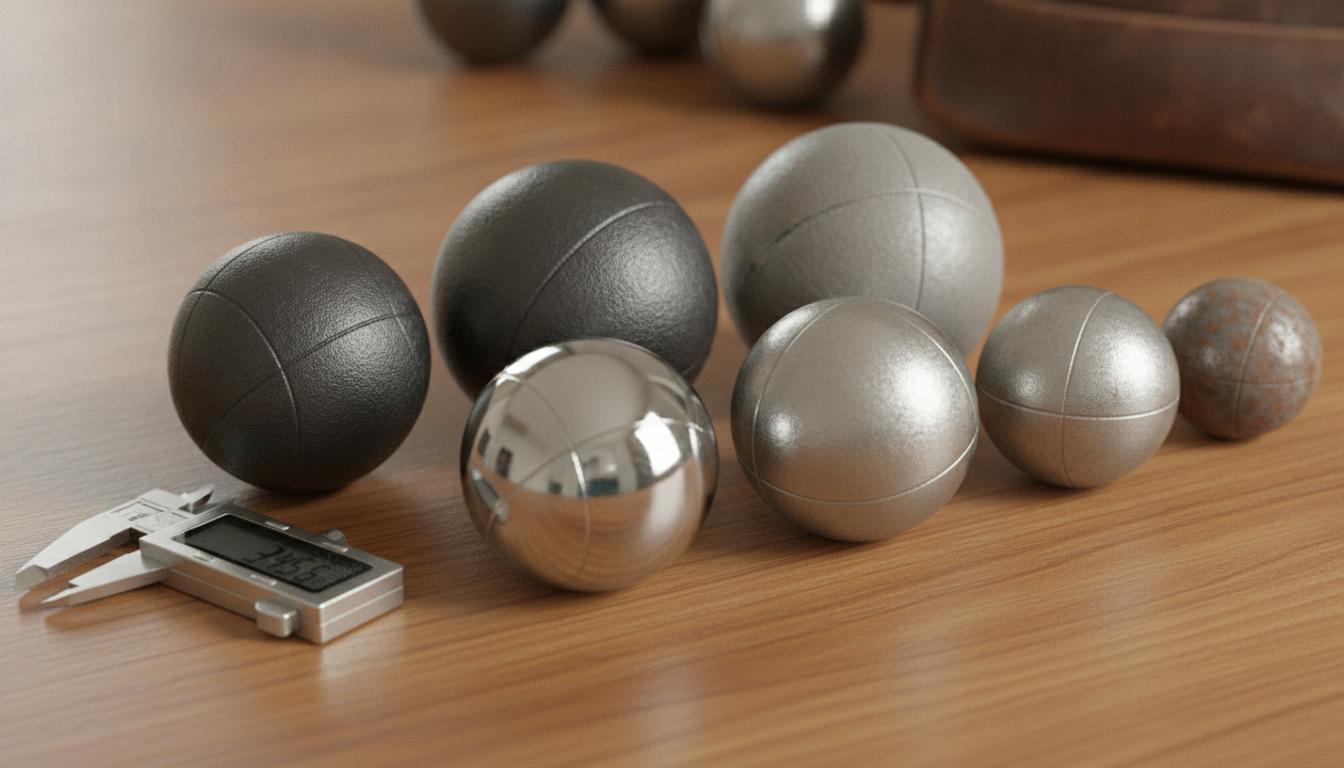
How to Choose Pétanque Boule Weight and Size: The Complete Guide
Selecting the right weight, diameter, and hardness is crucial for your pétanque performance. Learn how to measure your hand and choose the perfect boules for your style.
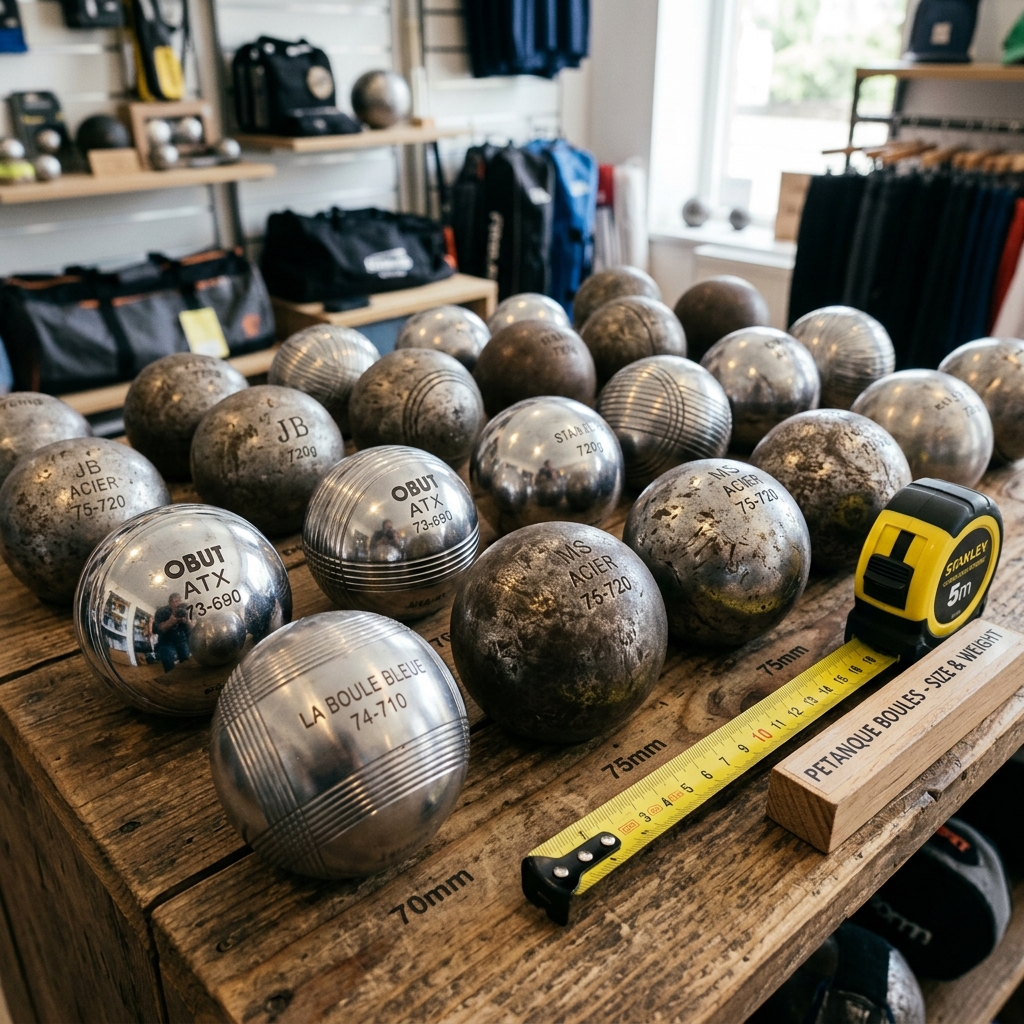
How to Choose Your First Pétanque Boules
A complete beginner's guide to selecting your first set of competition pétanque boules - size, weight, hardness, and material explained.
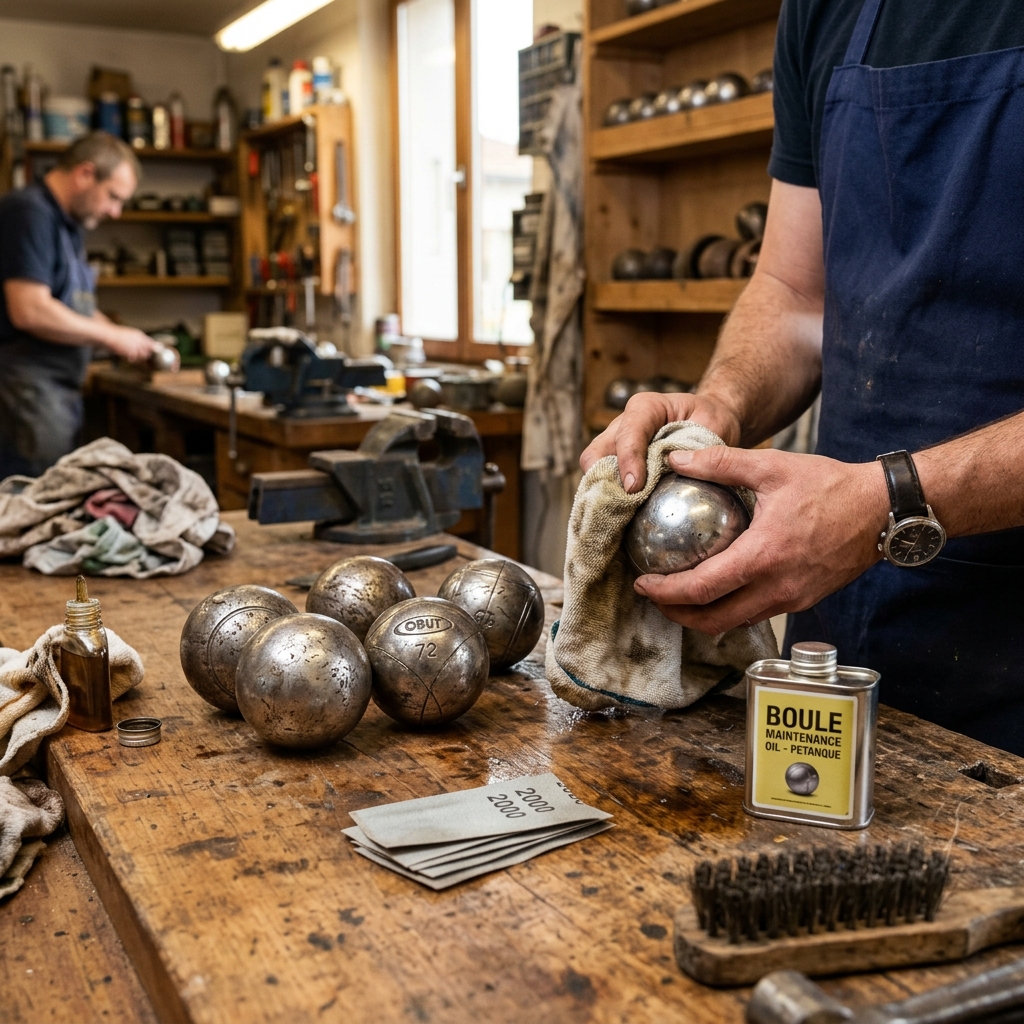
How to Maintain Your Pétanque Boules
Keep your boules in top condition with this guide to cleaning, storing, and maintaining both carbon steel and stainless steel boules.