
Pétanque Court Surfaces: How Terrain Changes Your Game
Gravel, sand, schist, clay, or rocky ground: every pétanque surface plays differently. Learn how to read a new court and adapt your technique before you throw.
Pétanque Court Surfaces: How Terrain Changes Your Game
The same throw that lands a perfect carreau on your home court can skid straight past the jack on a different one. That's not a bad day - it's the surface. FIPJP rules place almost no restriction on what a pétanque court is made of, so the sport is played on everything from manicured club gravel to a gritty village square, and each one rewards a different read of the ground. This guide walks through the surfaces you'll actually run into, how each one changes the way a boule rolls and bounces, and how to adjust your technique and boule choice before your first throw.
Why Surface Matters More Than Most Players Think
A boule's path is decided by three things: how it leaves your hand, how it lands, and what happens on impact. The first two are technique. The third is almost entirely the surface. Loose material lets a boule sink and stop quickly; a hard, compacted surface lets it skid and keep rolling; scattered stones can kick it sideways in a way no amount of skill can fully predict. Reading the terrain before you throw - not just where the jack is, but what the ground under your intended line actually is - is a core skill separate from pointing or shooting mechanics themselves, and it's why the same player can look brilliant on one court and ordinary on the next.
The Surfaces You'll Actually Play On
Gravel and Decomposed Granite (the club standard)
Fine crushed stone or decomposed granite (roughly 0-6mm) is the most common surface at clubs and official venues - the same material covered in our guide to building a backyard court. It compacts into a firm, slightly textured surface that gives a fairly consistent, moderate roll: predictable enough to plan a shot, but with just enough texture to check a boule's momentum. This is the most "textbook" surface, and both pointing and shooting techniques described elsewhere on this site assume ground roughly like this by default.
Sand
Compacted sand absorbs impact well and produces limited, predictable bounces, which makes it the most forgiving surface for beginners and casual games. The trade-off is that a boule won't travel as far as it would on harder ground, so pointers often need slightly more force than they expect, and shooters benefit from a harder boule (see our boule weight and hardness guide) since sand already does much of the shock-absorbing work for them. Watch the depth: sand that's too loose turns "soupy" and boules stop dead rather than settling naturally.
Schist and Quarry Dust
A blue-grey crushed stone popular in northern France, Belgium, and the Netherlands, schist compacts tightly and drains quickly, producing a fast, hard surface that's a favorite for competitive play. Boules roll a long way and bounce cleanly, which rewards precise pointers but also means shooters need to commit fully to a direct hit (tir au fer) - a half-hearted shot on schist tends to skid past rather than stopping on target. Softer boules help here too, since a hard boule on hard schist bounces more than it settles.
Clay and Hardpan
Very few surface obstacles and a genuinely homogeneous surface make clay courts fast and predictable - closer to a bowling green than a gravel pit. Boules roll a long way with little deviation, which favors pointer specialists who can trust a rolling roulette throw, and pushes shooters toward "full iron" direct hits since a tir fuse skidding shot rarely stops in time. Clay slows down noticeably after rain, so don't assume the same pace across a rainy tournament weekend - see our guide to playing in rainy weather for more on wet-court adjustments.
Loose Gravel and Rocky or Mixed Terrain
This is the least forgiving surface: scattered stones and uneven compaction mean a rolling boule deflects unpredictably on nearly every throw. Rolling is close to unusable here - most players shift almost entirely to a lobbed demi-portée or high portée, landing the boule on a clear patch rather than trusting a long roll across broken ground. It's also the surface where reading the donnée (the exact landing spot) before you throw matters most, since a spot that looks flat from standing height can hide a stone an inch below the surface.
Stabilized Ground (championship-grade mixes)
Many national and international championships use engineered "stabilized" surfaces - blended aggregate designed for consistency - but even these can behave differently court to court depending on how recently they were prepared, raked, or watered. The FIPJP itself only requires a marked, defined playing area of at least 4m x 15m for national and international competition (see our official rules guide for full dimensions); it doesn't mandate a specific surface material. That's precisely why top competitors spend the first few practice throws of a new tournament reading the ground rather than assuming it will play like the last one.
Grass, Dirt, and Informal Surfaces
Pétanque can technically be played almost anywhere - a park lawn, a packed-dirt yard, even a beach - and often is, casually. Grass in particular tends to be bouncy and inconsistent, and gets worse when wet, so treat any game on grass, bare dirt, or sand-and-shell beach mixes as genuinely different from club play: shorter, softer throws and a lot more tolerance for an unpredictable bounce.
Quick Reference: Surface vs. Technique
| Surface | Roll | Best throw | Boule hardness |
|---|---|---|---|
| Gravel / decomposed granite | Moderate, predictable | Any (pointing or shooting) | Half-soft (all-rounder) |
| Sand | Short, absorbed | Rolling for pointers | Harder boule helps |
| Schist / quarry dust | Fast, long | Full commitment shots | Softer boule recommended |
| Clay / hardpan | Very fast, long | Rolling (pointers), full iron (shooters) | Softer boule recommended |
| Loose gravel / rocky | Unpredictable | Lobbed (demi-portée, portée) | Durable, dent-resistant |
| Grass / dirt / informal | Bouncy, inconsistent | Shorter, softer throws | Either - consistency matters more |
Geologic Alpha Competition Solid Boules (3 Boules)
Durable ChoiceFIPJP-approved hard carbon steel boules (45 HRC) that resist denting on gravel and rocky terrain where bad bounces are common.
Best Price: €59.99 · Decathlon
Obut RCX
Fast-Surface ShooterA very soft, shock-absorbing stainless steel boule built for shooters on fast, hard surfaces like schist and clay, where a harder boule bounces instead of stopping.
Best Price: €240 · PetanqueShop
Reading a New Court Before You Throw
- Walk the line, don't just look at it. A patch of ground that looks flat from the throwing circle can hide a slope, a stone, or a soft spot up close.
- Use your allowed ground-testing. Tapping the ground with a boule you're still holding - tâter la donnée - is explicitly allowed by FIPJP rules, up to three taps, and it's the fastest legal way to feel whether the ground is hard or soft before you commit to a throw.
- Watch the first few boules played, including your opponents'. Nothing tells you more about a court's true speed than seeing how someone else's boule actually behaves on it.
- Don't try to improve the ground yourself. Deliberately sweeping or smoothing a patch of terrain to help a shot is against the rules, and referees have been enforcing this more strictly since the 2026 season - see our 2026 rule changes guide for the full detail on what is and isn't allowed.
Practice Across Surfaces, Not Just One
If you only ever play on your home club's gravel, a tournament on schist or a casual game on a rocky village square will feel unfamiliar even if your mechanics are sound. Our training drills guide and strategy guide cover building the fundamentals that transfer between surfaces - but there's no substitute for logging real throws on more than one type of ground before it matters in competition.
Related Articles
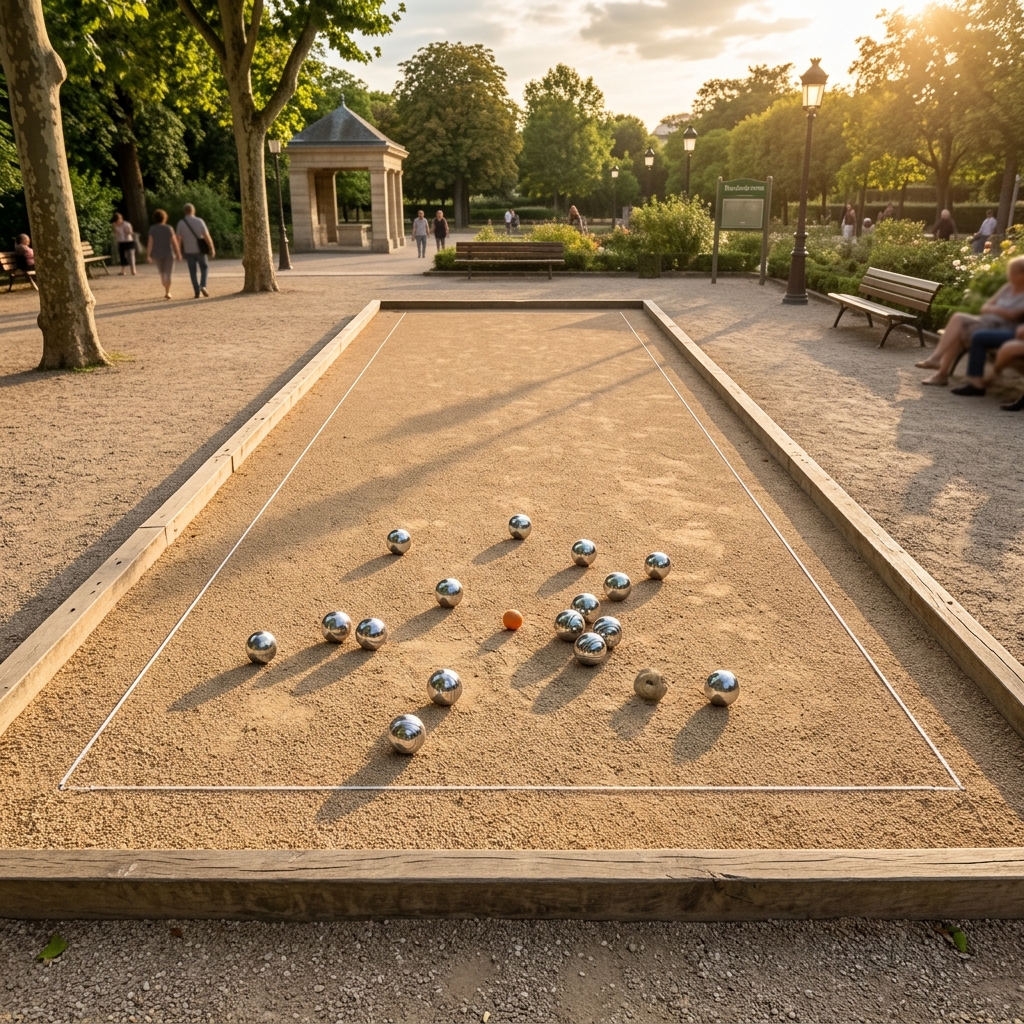
Pétanque Court Dimensions and Setup Guide
Everything you need to know about official FIPJP pétanque court dimensions, marking rules, surface materials, and terrain setup for competitions and home play.
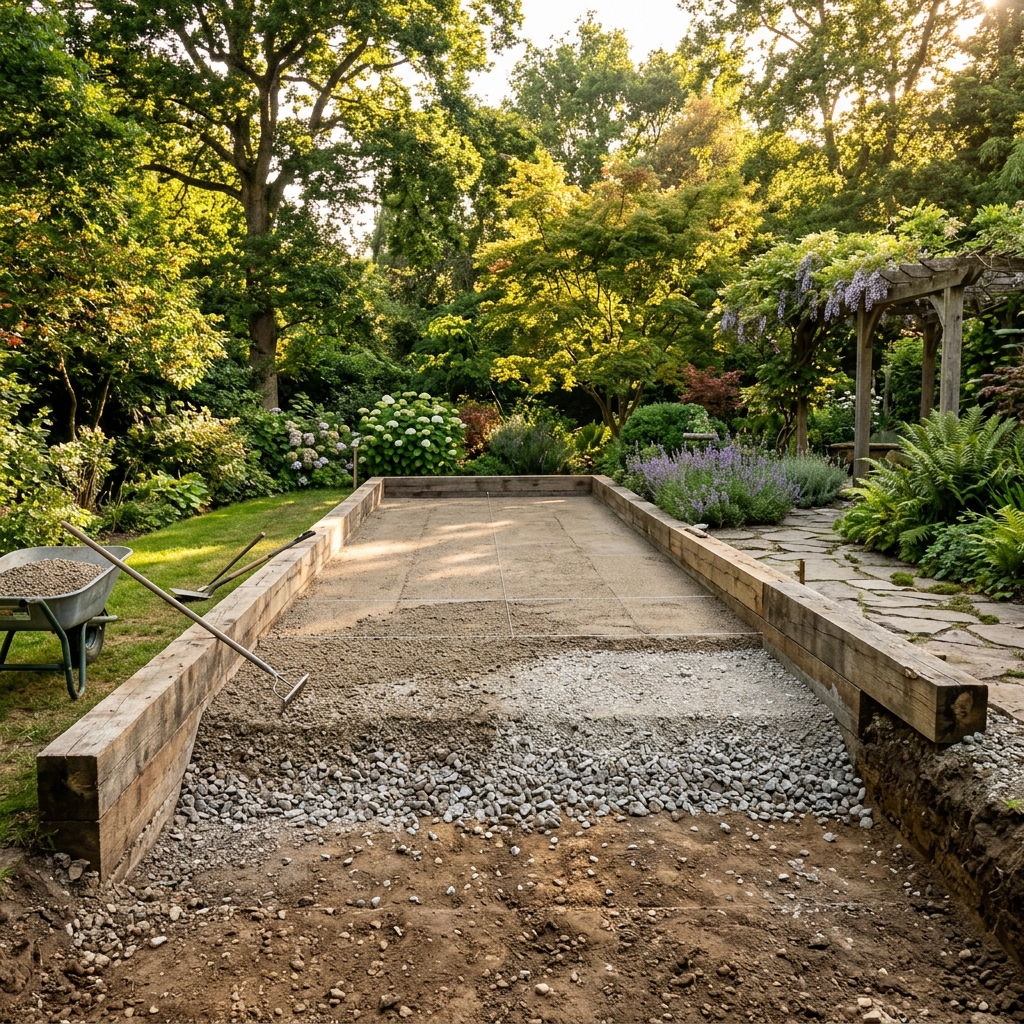
How to Build a Backyard Pétanque Court: The Complete DIY Guide
Turn your backyard into a pétanque paradise. Learn the exact dimensions, materials, and steps to build a professional-quality pétanque court at home.
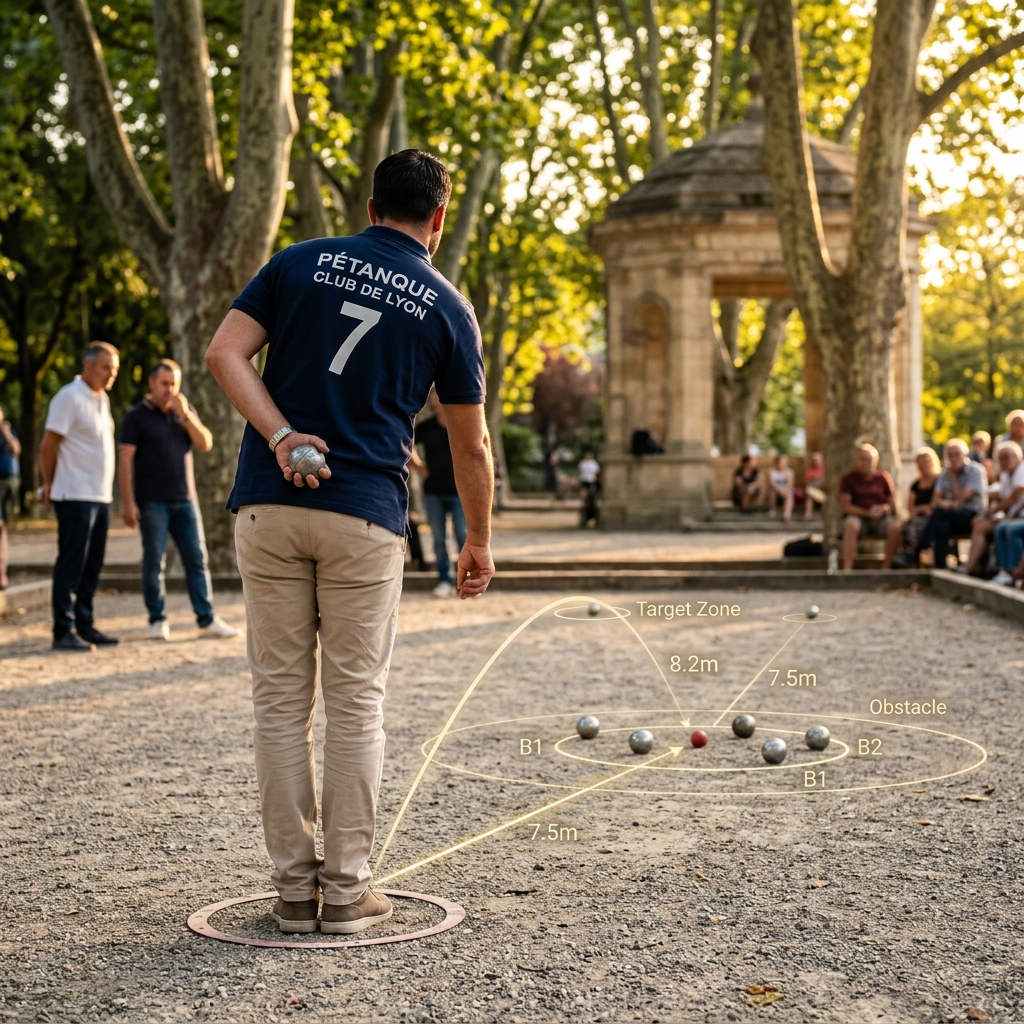
Advanced Pétanque Strategy & Tactics: The Chess of Boules
Master the mental game of pétanque. Learn advanced team roles, the art of the jack throw, managing boule advantage, and psychological tactics to win more matches.