
The Complete Pétanque Terminology Glossary: French & English
Master the language of pétanque with our comprehensive A-Z glossary. Learn every French and English term from 'Cochonnet' to 'Carreau' with detailed definitions.
The Complete Pétanque Terminology Glossary
Whether you are playing in a sunny park in Provence or a local tournament in London, you will hear a rich and colorful language used on the court. Much of this terminology remains in its original French, which can be intimidating for newcomers.
This comprehensive glossary covers everything from basic equipment to advanced technical shots and traditional slang.
Quick Navigation
A | B | C | D | E | F | G | H | I | J | K | L | M | N | O | P | Q | R | S | T | U | V | W | X | Y | Z
The Basics
Pétanque
The name of the sport, derived from the Provençal expression pès tancats, meaning "feet fixed" or "feet anchored" to the ground.
Mène (End / Round)
The part of a game played from the moment the circle is placed until all players have thrown all their boules. A standard game consists of several mènes until one team reaches 13 points.
But / Cochonnet (Jack / Target)
The small wooden target ball. While officially called the but (goal), it is most commonly known as the cochonnet (little pig). Other colloquial names include le petit, bouchon (cork), or gari.
Terrain (Court / Pitch)
The area where the game is played. In pétanque, this is typically a natural surface like gravel, hard-packed dirt, or crushed stone.
Rond (The Circle)
The throwing circle, which can be drawn in the dirt or be a prefabricated plastic ring. It must have a diameter between 35cm and 50cm.
Players and Positions
Pointeur (Pointer)
The player who specializes in placing their boules as close to the jack as possible.
Tireur (Shooter)
The player who specializes in knocking the opponent's boules away from the jack.
Milieu (All-rounder / Middle)
In a triplette (team of three), the middle player who can both point and shoot effectively depending on the situation.
Bouliste
A general term for a pétanque player.
A-Z Glossary
A
Allez!
The universal shout of encouragement ("Go!" or "Come on!") heard on pétanque courts worldwide.
Arbitre (Umpire)
The official responsible for ensuring the rules are followed and settling disputes on measurements. See our pétanque umpiring guide for what the role covers and how to become one.
Arriver à bataille
An expression used when both teams reach a high score (usually 10-10 or 11-11), indicating the final, high-pressure phase of the game.
Avoir le point (To hold the point)
When your team's boule is currently closer to the jack than the opponent's closest boule.
B
Bec (Kiss)
To strike one of your own boules already in play to move it into a better scoring position or to change your own boule's trajectory toward the jack.
Biberon (Baby's Bottle)
When a boule finishes in physical contact with the jack. Also known as a têtard (tadpole) or embouchonner.
Bouchon
Another name for the jack (cochonnet), literally meaning "cork."
Boule devant
A famous pétanque maxim: "Boule devant, boule d'argent" (A boule in front is a boule of silver). It refers to the strategy of placing boules in front of the jack to act as obstacles for opponents.
Braquer
To stare intensely at an opponent while they are preparing to throw, in an attempt to distract them or break their concentration.
Buffet
A shot that hits the target boule with such force that it makes a loud, distinctive "clack" sound.
C
Carreau
The "perfect shot." A shooting boule hits the target boule, knocks it away, and stays exactly (or very near) where the target boule was.
Casquette (Cap)
An unfortunate shot where the shooting boule hits the very top of the target boule without moving it, simply "capping" it and continuing its flight.
Cercle
The throwing circle (see Rond).
Consolation (Consolante)
A secondary tournament for teams that were eliminated early in the main competition.
D
Demi-portée (Half-lob)
A pointing technique where the boule is thrown in a medium arc, landing roughly halfway between the circle and the jack before rolling the rest of the way.
Devant de boule
When a boule is placed directly in front of and touching an opponent's boule, making it extremely difficult for them to shoot without hitting their own ball.
Donnée (Landing Spot)
The exact spot on the terrain where a pointer intends for their boule to land. Choosing the right donnée is crucial for avoiding obstacles or grattons.
F
Fanny (Mettre Fanny / Être Fanny)
To win or lose a game 13-0. Traditionally, the losing team would have to kiss the buttocks of a character named Fanny. Today, it usually means the losers buy the winners a round of drinks.
Faire un trou (To make a hole)
To miss a shot completely, hitting only the ground.
G
Gari
A colloquial Provençal name for the jack (cochonnet).
Gratton
A small stone, pebble, or uneven bump on the court that causes a boule to change direction unexpectedly.
M
Manger le point (To eat the point)
To successfully take the point from the opponent, especially when their boule was already very close to the jack.
Mettre la table (To set the table)
When a pointer has placed their boules so perfectly that the path for a shooter is clear and the strategic situation is ideal.
P
Palet
A successful shot where the shooting boule stays within a short distance (usually less than 50cm) of the spot where it hit the target boule.
Plombée (High Lob / Plop)
An advanced pointing technique where the boule is thrown very high so that it falls almost vertically near the jack, minimizing its roll. Also called a portée haute.
Portée (Lob)
The general term for pointing by throwing the boule through the air in an arc.
Poussette (Push)
When a thrown boule pushes another boule (usually one of your own) into a better position.
R
Rafle (Raspaille)
A shooting technique where the boule is thrown low to the ground and rolls toward the target, rather than hitting it directly au fer (in the air).
Retro (Backspin)
The "effet" or spin put on a boule by flicking the wrist upward during release, causing the boule to stop more quickly upon landing.
S
Serrer le jeu (To squeeze the game)
A defensive strategy where a team, knowing they are in a bad position, tries to place their remaining boules as close as possible to the jack to prevent the opponent from scoring multiple points.
Stries (Striations)
The grooves or patterns engraved on the surface of a boule to help players identify their balls and to provide better grip or spin.
T
Tête-à-tête (Singles)
A game played one-on-one, with each player using three boules.
Tir au fer (Shooting at the iron)
The most prestigious shooting technique, where the thrown boule hits the target boule directly in the air without touching the ground first.
Need New Equipment?
If you're looking to improve your game, having the right set of boules is essential. Check out our Best Competition Boules 2026 for expert reviews and recommendations.
Related Guides
- Beginner's Guide to Pétanque
- Official Pétanque Rules
- Mastering Pointing Techniques
- Advanced Shooting Tactics
- Pétanque vs. Bocce Ball
- Pétanque vs. Jeu Provençal vs. Boule Lyonnaise
- Pétanque vs. Lawn Bowls
- Pétanque Etiquette & Unwritten Rules
- Pétanque Rules 2026: What Actually Changed (and What's a Rumor)
- Pétanque Injuries: Common Causes, Health Benefits, and How to Prevent Them
- The History of Pétanque: From La Ciotat to the World Stage
- Buying Used Pétanque Boules: A Buyer's Checklist
- Playing Pétanque in Rain and Wet Weather: 6 Adjustments That Matter
- How to Build a Backyard Pétanque Court: The Complete DIY Guide
- Petanque Tournament Formats Explained: Melee, Swiss, Poules & More
- Traveling With Pétanque Boules: A Flying and Packing Guide
- Pétanque Court Surfaces: How Terrain Changes Your Game
- How to Choose Your First Pétanque Boules
Related Articles
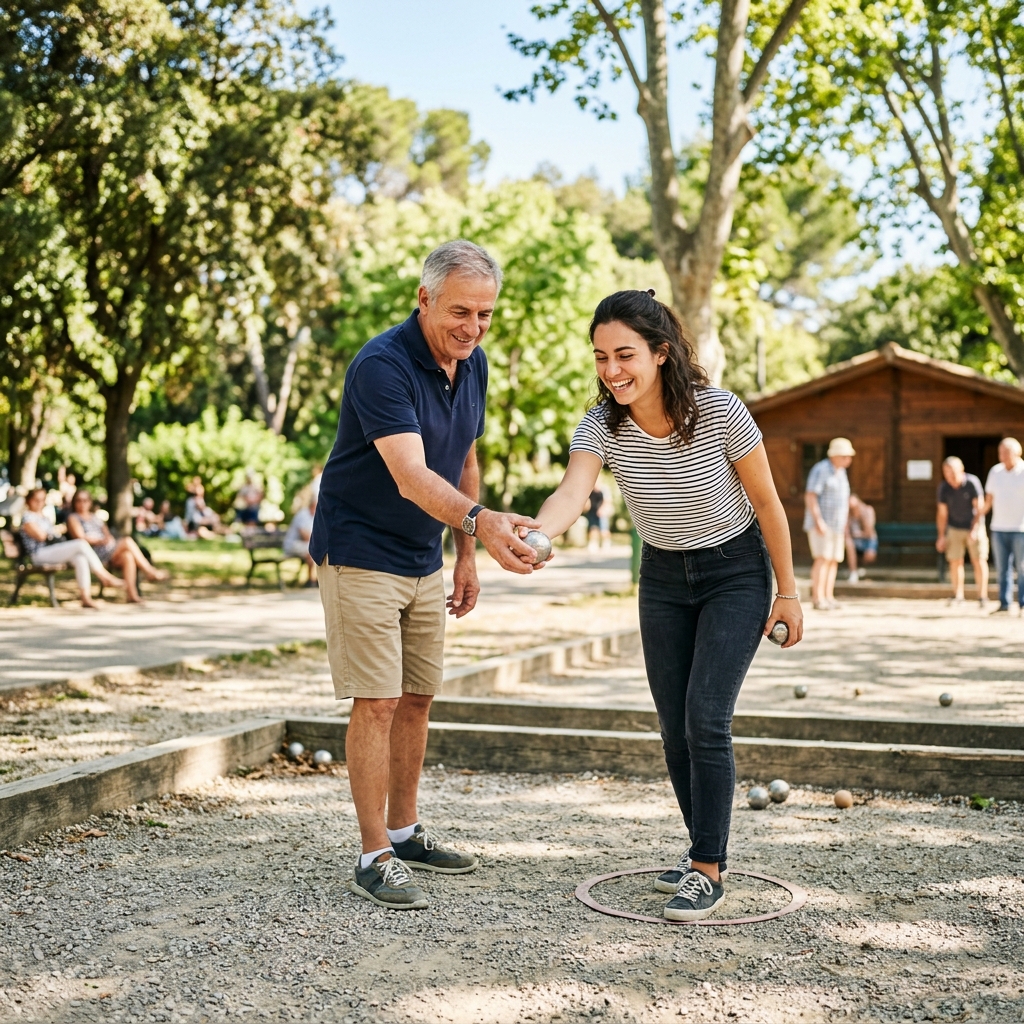
Beginner's Guide to Pétanque: Everything You Need to Know
New to pétanque? Learn the basics - how to play, what you need, scoring, and etiquette in this comprehensive beginner's guide.
Pétanque Etiquette: The Unwritten Rules Every Player Should Know
The official rulebook doesn't cover where to stand, when to stay quiet, or who fills the holes. Here's the etiquette that keeps pétanque courts friendly worldwide.
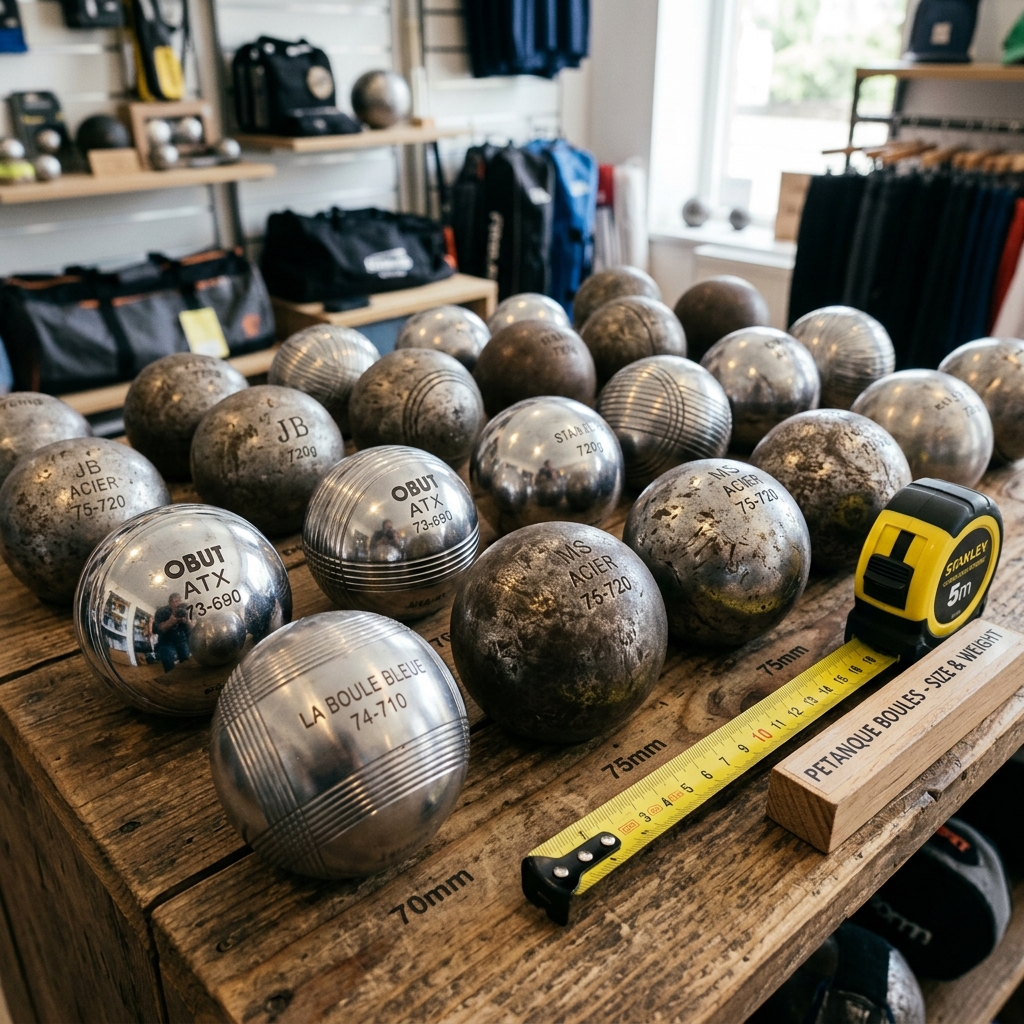
How to Choose Your First Pétanque Boules
A complete beginner's guide to selecting your first set of competition pétanque boules - size, weight, hardness, and material explained.