
Playing Pétanque in Rain and Wet Weather: 6 Adjustments That Matter
Rain does not have to end your game. Learn how wet terrain changes boule behavior and the equipment, technique, and maintenance adjustments experienced players make.
Playing Pétanque in Rain and Wet Weather: 6 Adjustments That Matter
Pétanque is a fair-weather sport in the popular imagination, but plenty of matches, especially club leagues and multi-day tournaments in places like Provence, the Côte d'Azur, and the rainier parts of Northern Europe, get played on damp or actively wet terrain. Rain does not usually stop play outright; it changes how the game behaves. Here is what experienced players adjust, based on guidance from French departmental pétanque federations and manufacturer maintenance advice, cross-checked against our own official rules and terrain-reading content.
1. Expect Shorter, Deader Ground
Dry terrain lets a boule skid on landing and roll out toward its final resting spot. Wet terrain absorbs much of that impact energy instead, so the boule "plants" closer to where it first touches down. French departmental pétanque committees describe this as a real, noticeable drop in both distance and carreaux (direct hits) on waterlogged ground - the specific percentages sometimes quoted in club materials do not trace back to one settled FFPJP or FIPJP figure, so treat the effect as qualitative rather than a precise number.
The practical fix: shorten your usual pointing distance by about 20-40 cm and commit to it. Players who keep throwing their normal dry-weather distance on wet ground consistently fall short, because muscle memory is calibrated for a bounce and roll that simply is not happening.
2. Favor a Firmer, More Direct Gesture
On soggy ground, a soft, delicate touch that would work beautifully on hard summer terrain (see our hot weather tips for the opposite problem) tends to get swallowed by the mud. A firmer, more committed release that pushes through the ground's resistance holds its line better than a gentle lob. Aim for intermediate zones between visible puddles or soft patches rather than the driest-looking spot right next to the jack, since the driest spot is often surrounded by the softest run-up.
3. Rethink Which Shots You Reach For
- Pointing: Avoid the low, rolling coulée style on wet ground - a boule that's supposed to roll can zigzag unpredictably through puddles or stop dead the moment it hits a soft patch. A shorter, slightly lofted approach that lands nearer the target is far more repeatable.
- Shooting: Keep the trajectory tighter and lower than you would on dry ground, with solid ball rotation, rather than reaching for a big, high arc. Only genuinely soft, muddy ground (not just wet) rewards extra lift; on merely wet ground a flatter, more controlled shot holds up better. Our shooting techniques guide covers the grip and release mechanics this depends on.
4. Choose (or Favor) the Right Finish
A rough or satin/matte boule finish grips wet ground noticeably better than a highly polished, mirror-finish competition boule, which tends to skate rather than bite on damp surfaces. This is not a reason to buy an entirely new set just for rainy days, but if you already own both a polished and a semi-polished or striated set, wet weather is exactly when the more textured set earns its keep. See our boule selection guide for how finish, diameter, and weight interact.
5. Protect Your Equipment Mid-Match, Not Just Afterward
- Carry a small towel or microfiber cloth and wipe boules down between ends. A damp boule loses grip and precision in your hand before it even leaves your fingers, which matters as much as the ground it lands on.
- Wear shoes with real tread. Standard outdoor or hiking-style soles handle most wet terrain fine; smooth-soled court shoes lose traction fast on wet gravel or grass.
- A lightweight, breathable waterproof layer beats a heavy rain jacket - staying dry matters less than staying loose, since sweating inside a stiff jacket costs you grip just as much as rain does. Our pétanque shoes guide and accessories roundup cover options built for exactly this kind of session.
6. Dry Everything Properly When You Get Home
Rain during a match is temporary; rust from boules left damp overnight is not. As soon as you're done, wipe each boule dry, and once home, a quick rinse under hot water followed by a full towel-dry, plus keeping them out of a sealed plastic pouch, prevents the trapped condensation that actually causes oxidation - a single wet match is not the problem, storing boules wet is. Carbon steel boules are generally more rust-prone than stainless, though the safe habit is the same prompt-drying routine for either type. Our full boule maintenance guide covers the complete cleaning and rust-prevention routine, including what to do if surface rust has already set in.
When to Just Stop Playing
None of this applies once the terrain crosses from "wet" into "flooded" or "unsafe" - standing water, slick mud that swallows a boule on landing, or a genuinely unstable footing are reasons to pause, not adjust technique around. In sanctioned competition, that call belongs to the umpire or organizer, not individual players; Article 36 of the official rules guide covers exactly how play is suspended and resumed. For a casual club game, the same judgment call is just common sense: if you can't stand safely in the circle, it's time for a coffee, not a workaround.
Related Articles
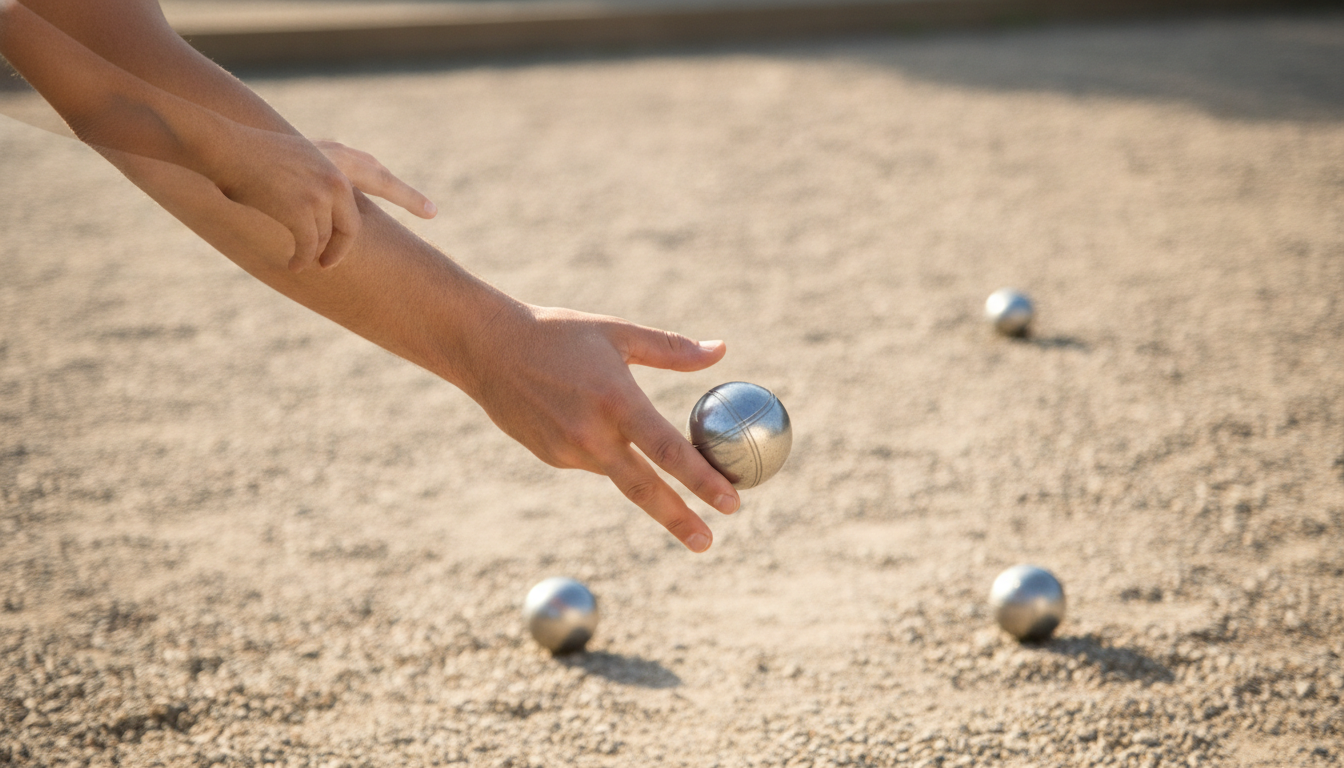
Pétanque Injuries: Common Causes, Health Benefits, and How to Prevent Them
Pétanque looks gentle, but repeated throwing adds up. A sports-medicine look at elbow, shoulder, knee, and ankle injuries, plus a warm-up routine that cuts your risk.

5 Tips for Playing Pétanque in Hot Weather
Stay sharp and play your best game even when temperatures soar. Essential tips for summer pétanque.
Petanque Coach on YouTube: Free Coaching Tips, Interviews, and a Learning Community
A closer look at the Petanque Coach YouTube channel - its tip series and player interviews - plus the free Petanque Performance Academy community it runs on Skool.